In today’s increasingly litigious and unpredictable economic landscape, operating a business without comprehensive insurance is not just a risk—it is an existential threat. Whether you are a Small and Medium-sized Enterprise (SME) bootstrapping your way to your first million, or a multinational corporate entity managing complex global supply chains, securing the right commercial coverage is foundational to your survival and growth.
This definitive guide explores the top business insurance providers for SMEs and corporates, dissecting the highest-rated carriers, the critical types of coverage you must carry, and the nuances of comparing business insurance quotes online. We will dive deep into high-value coverages like cyber liability insurance, workers’ compensation insurance, and commercial property insurance to ensure your enterprise is fortified against modern risks.
The Critical Importance of Commercial Insurance
Business insurance is not a monolithic product; it is a complex portfolio of risk transfer mechanisms tailored to the unique operational exposures of a company.
For SMEs, a single lawsuit—perhaps stemming from a slip-and-fall incident or a professional error—can easily bankrupt the company. According to industry data, the average cost of a small business liability claim sits around $30,000, while more severe claims like reputational harm or product liability can soar well into the millions.
For Corporates, the risks are exponentially larger. Large enterprises face class-action lawsuits, massive data breaches, supply chain disruptions, and complex regulatory fines. Corporate insurance requires high-capacity limits, global reach, and specialized underwriters who understand macro-economic and industry-specific risks.
The Financial Safety Net: Why You Cannot Afford to Cut Corners
-
Legal Compliance: In almost all jurisdictions, specific coverages like workers’ compensation insurance and commercial auto insurance are legally mandated. Operating without them invites severe penalties, license revocations, and criminal charges.
-
Contractual Requirements: To secure commercial leases, win client contracts, or secure venture capital/bank loans, proof of insurance (specifically General Liability and Professional Liability) is universally required.
-
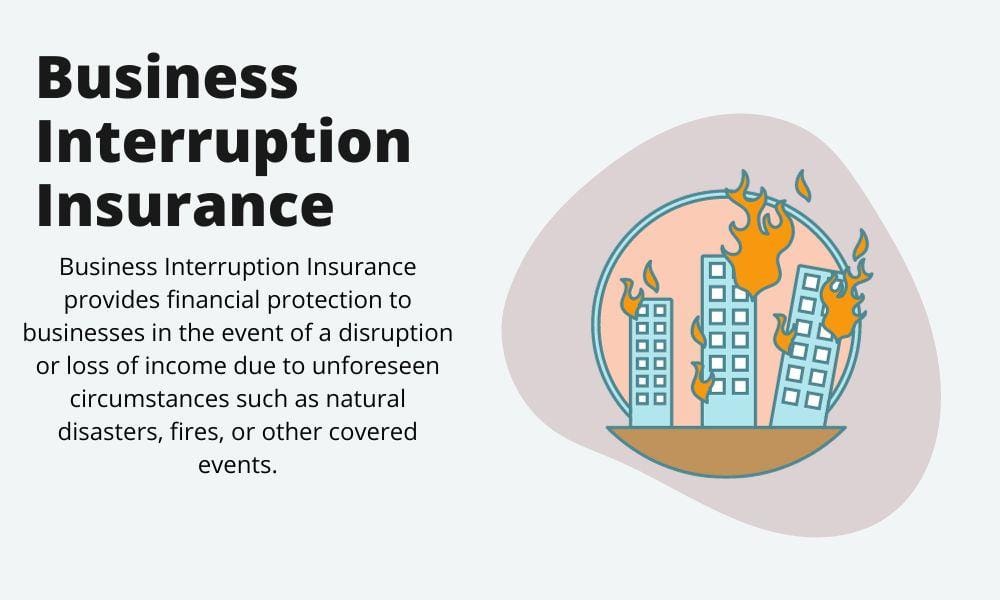
Business Continuity: Business interruption insurance guarantees that if your physical operations are halted due to a covered peril (like a fire or natural disaster), your ongoing expenses and lost profits are covered, keeping you solvent during the rebuild.
The Business Insurance Ecosystem
To understand which provider is best, you must first understand the coverage. Here is a deep dive into the most critical (and highly searched) commercial insurance policies.
1. General Liability Insurance (GLI)
Often referred to as the bedrock of commercial insurance, GLI protects your business against foundational risks.
-
What it covers: Third-party bodily injury, third-party property damage, advertising injury (slander, libel), and reputational harm.
-
Who needs it: Every single business, from home-based freelancers to Fortune 500 manufacturers.
-
Cost factors: Foot traffic, industry risk level, and location.
2. Professional Liability Insurance (Errors and Omissions / E&O)
If your business provides a service or advice, you are exposed to claims of negligence, misrepresentation, or failure to deliver promised results.
-
What it covers: Legal defense costs, settlements, and judgments arising from professional mistakes or bad advice that causes financial harm to a client.
-
Who needs it: Consultants, IT professionals, marketing agencies, accountants, lawyers, and real estate agents.
3. Workers’ Compensation Insurance
A critical, highly regulated coverage that protects your most valuable asset: your employees.
-
What it covers: Medical expenses, rehabilitation costs, and a portion of lost wages for employees injured on the job. It also provides employer liability coverage in case the injured employee sues the company for negligence.
-
Who needs it: Any business with W-2 employees.
-
Cost factors: Determined by payroll size and your industry’s worker classification codes (e.g., roofing companies pay significantly higher premiums than software development firms).
4. Cyber Liability Insurance
With the explosion of ransomware, phishing, and data breaches, cyber liability insurance coverage has transitioned from a niche luxury to an absolute necessity.
-
What it covers: Data recovery costs, customer notification expenses, credit monitoring for affected clients, ransomware extortion payments, and legal fees associated with privacy regulatory fines.
-
Who needs it: Any business that stores customer data, processes payments online, or relies on cloud infrastructure.
5. Commercial Property Insurance
This is the commercial equivalent of homeowners insurance, protecting your company’s physical assets.
-
What it covers: Buildings, equipment, inventory, furniture, and signage against perils like fire, theft, vandalism, and certain natural disasters.
-
Who needs it: Businesses that own or lease physical office space, retail storefronts, or manufacturing facilities.
6. Business Owner’s Policy (BOP)
A BOP is an immensely popular, cost-effective bundle specifically designed for low-risk SMEs.
-
What it covers: It seamlessly combines General Liability Insurance and Commercial Property Insurance into a single, discounted package. Often, it also includes Business Interruption Insurance.
-
Who needs it: Small businesses with physical assets facing standard liability risks.
7. Directors and Officers Insurance (D&O)
Essential for corporate governance, D&O insurance protects the personal assets of corporate directors and officers.
-
What it covers: Defense costs and damages arising from lawsuits alleging mismanagement, breach of fiduciary duty, or regulatory non-compliance brought by shareholders, employees, or competitors.
-
Who needs it: Startups seeking venture capital, publicly traded companies, and large corporate entities.
8. Commercial Auto Insurance
Personal auto insurance universally excludes vehicles used primarily for business purposes.
-
What it covers: Liability for bodily injury and property damage caused by company-owned vehicles, as well as physical damage to the vehicles themselves.
-
Who needs it: Logistics companies, contractors with fleets, or any business where employees drive for work purposes.
9. Employment Practices Liability Insurance (EPLI)
-
What it covers: Legal defense and settlements for claims related to wrongful termination, discrimination, sexual harassment, and hostile work environments.
-
Who needs it: Any business with a growing workforce, especially crucial in today’s highly sensitive corporate environment.
Top Business Insurance Providers for SMEs (Small & Medium Enterprises)
SMEs require agility, digital-first experiences, fast quote generation, and cost-effective bundling. The following providers dominate the SME market.
1. Hiscox
Best For: Independent contractors, micro-businesses, and professional service firms.
-
The Advantage: Hiscox is a global heavyweight that has perfectly tailored its offerings for the modern micro-business. They excel in Professional Liability Insurance (E&O), offering highly specific policies for IT consultants, marketers, and allied health professionals.
-
Digital Experience: They offer one of the most intuitive online quote systems, allowing sole proprietors to get bound coverage in less than 15 minutes.
-
Drawback: They may not have the capacity for heavy industrial or manufacturing risks.
2. NEXT Insurance
Best For: Digital-first businesses seeking entirely online management.
-
The Advantage: NEXT Insurance was built from the ground up to disrupt the traditional, slow-moving insurance model. They utilize AI-driven underwriting to provide instant business insurance quotes online.
-
Product Strength: They offer excellent, customizable BOPs (Business Owner’s Policies) and are incredibly aggressive in pricing for retail, construction, and fitness SMEs.
-
Drawback: Because they are relatively new compared to legacy carriers, their appetite for highly complex, unusual risks is lower.
3. The Hartford
Best For: Comprehensive Workers’ Compensation and robust BOPs.
-
The Advantage: The Hartford is a legacy giant with an impeccable reputation. They are widely considered the gold standard for workers’ compensation insurance for small businesses, offering pay-as-you-go billing options that heavily integrate with popular payroll software (like Gusto or QuickBooks) to help SMEs manage cash flow.
-
Product Strength: Their “Spectrum” BOP is highly customizable, allowing SMEs to tack on data breach coverage or employment practices liability seamlessly.
-
Drawback: Premiums can be slightly higher than pure digital disruptors, reflecting their premium service and legacy stability.
4. State Farm
Best For: SMEs that value in-person agent relationships.
-
The Advantage: If your business is deeply rooted in a local community, having a dedicated local agent can be invaluable during a complex claim. State Farm boasts the largest network of local agents in the United States.
-
Product Strength: Excellent commercial auto insurance and commercial property coverage for Main Street businesses (restaurants, local retail, mechanics).
-
Drawback: Their online quoting process is often gated; you usually have to speak to an agent to finalize a policy, which slows down the process for founders looking for instant digital binding.
5. Chubb
Best For: High-value SMEs with niche, complex risks.
-
The Advantage: Chubb is synonymous with high-end, premium coverage. For an SME that deals in high-value goods (like a boutique jeweler) or operates globally, Chubb offers unmatched underwriting expertise.
-
Product Strength: They are market leaders in Cyber Liability Insurance coverage and multinational risk packages. Their claims handling is widely regarded as the most generous and efficient in the industry.
-
Drawback: They are highly selective. They are not the cheapest option and will decline low-margin, high-frequency risk profiles.
Top Business Insurance Providers for Corporates & Large Enterprises
Large corporate entities do not buy off-the-shelf policies. They require bespoke risk management portfolios, massive capacity limits, captive insurance solutions, and global compliance frameworks.
1. Travelers
Best For: Expansive commercial coverage and risk control services.
-
The Advantage: Travelers is a titan in commercial insurance. They offer an unmatched breadth of products tailored to large-scale operations. What sets them apart is their dedicated “Risk Control” department—a massive network of safety professionals, engineers, and industrial hygienists who work directly with corporate clients to mitigate risks before claims happen.
-
Corporate Strengths: Inland marine, massive commercial auto fleets, and heavy construction wrap-up policies.
2. Zurich (Zurich North America / Global)
Best For: Multinational corporations with global supply chains.
-
The Advantage: If your corporation manufactures in Asia, warehouses in Europe, and sells in North America, Zurich is the premier choice. They have an incredible international footprint and deep expertise in navigating the complex web of cross-border compliance and tax regulations regarding insurance.
-
Corporate Strengths: Global corporate property, supply chain disruption insurance, and complex D&O (Directors and Officers) towers.
3. Liberty Mutual
Best For: Industry-specific corporate solutions and casualty lines.
-
The Advantage: Liberty Mutual takes a deeply verticalized approach. They have specialized corporate underwriting teams dedicated exclusively to specific industries: energy, healthcare, real estate, and private equity.
-
Corporate Strengths: They are powerhouses in primary and excess casualty, environmental liability, and large-scale workers’ compensation programs (including loss-sensitive and retro-spective rating plans).
4. AIG (American International Group)
Best For: High-capacity, specialty, and catastrophic risks.
-
The Advantage: When massive corporations need hundreds of millions of dollars in coverage limits for obscure or highly volatile risks, they turn to AIG. AIG has the financial capacity to underwrite risks that other carriers simply cannot touch.
-
Corporate Strengths: Aviation, marine, massive cyber-terrorism limits, and specialized mergers and acquisitions (M&A) insurance like Representation and Warranties (R&W) coverage.
5. CNA Financial
Best For: Technology, healthcare, and professional services conglomerates.
-
The Advantage: CNA is deeply respected for its underwriting discipline and sector expertise. They are the endorsed carrier for numerous national professional associations.
-
Corporate Strengths: They offer some of the most sophisticated Professional Liability Insurance and medical malpractice frameworks for large hospital networks and global consulting firms.
Factors Influencing Business Insurance Costs
Understanding how underwriters calculate your commercial insurance premiums is crucial to lowering your costs. While high CPC keywords like “workers compensation insurance cost” dominate search engines, the answer is always highly variable based on these core pillars:
-
Industry Risk Classification: A software development agency presents incredibly low physical risk. A commercial roofing company presents catastrophic physical risk. The industry you operate in determines your base rate.
-
Payroll and Revenue: More employees mean higher workers’ compensation premiums. Higher revenue means a broader footprint, exposing you to higher General Liability premiums.
-
Location: Businesses operating in areas prone to natural disasters (hurricanes in Florida, wildfires in California) will see exponentially higher Commercial Property rates. Similarly, operating in highly litigious states increases liability premiums.
-
Claims History (Loss Run): Insurance companies scrutinize your past 3 to 5 years of claims history. A clean “loss run” can earn you substantial credits (discounts); a history of frequent or severe claims will trigger surcharges or policy non-renewal.
-
Coverage Limits and Deductibles: Choosing a $2 million aggregate limit over a $1 million limit will increase premiums. Conversely, opting to carry a higher deductible (the amount you pay out-of-pocket before insurance kicks in) will lower your annual premium.
How to Proactively Lower Your Premiums
-
Implement Safety Programs: For workers’ comp, having documented safety training and a return-to-work program can drastically lower your Experience Modification Rate (Ex-Mod).
-
Invest in Cybersecurity: To lower your Cyber Liability Insurance coverage costs, implement multi-factor authentication (MFA), endpoint detection and response (EDR), and routine employee phishing simulations. Insurers will deny coverage entirely if these basic hygiene practices are absent.
-
Bundle Policies: Always ask about a Business Owner’s Policy (BOP) or commercial package discounts.
How to Compare Business Insurance Quotes Online
The digital age has democratized the insurance purchasing process. However, comparing commercial policies is vastly more complicated than comparing personal auto insurance.
1. Direct Writers vs. Aggregators vs. Brokers
-
Direct Writers (e.g., NEXT, Hiscox, Geico Commercial): You deal directly with the company underwriting the policy. It is fast and often cheaper, but you only see one company’s offering.
-
Aggregators (e.g., CoverWallet, Insureon): These are digital marketplaces. You input your business data once, and their algorithm pings multiple carriers to return several quotes. Excellent for SMEs looking to price shop rapidly.
-
Commercial Brokers (e.g., Marsh, Aon, Gallagher): Essential for large SMEs and Corporates. Brokers represent you, not the insurance company. They negotiate terms, structure complex insurance towers, and have access to wholesale surplus lines markets that standard aggregators cannot reach.
2. What to Look For Beyond the Price Tag
Never buy commercial insurance based purely on the lowest premium. Pay strict attention to:
-
Exclusions: What is not covered? For example, does your General Liability policy strictly exclude injuries related to a specific product you manufacture?
-
Claims-Made vs. Occurrence Policies: * Occurrence: Covers incidents that happen during the policy period, regardless of when the claim is filed. (Ideal, but more expensive).
-
Claims-Made: Covers incidents only if the policy is active both when the incident occurred and when the claim is filed. (Common in Professional Liability).
-
-
Financial Strength Ratings: Always check the carrier’s A.M. Best rating. You want a carrier rated ‘A’ (Excellent) or ‘A+’ (Superior) to ensure they have the capital reserves to pay out massive claims during an economic downturn.
Emerging Trends Shaping Commercial Insurance
The commercial insurance market is in a constant state of flux, reacting to global macro-trends.
-
The Hard Market: We are currently experiencing a “hard market” in many commercial lines, meaning underwriting standards are stricter, capacity is reduced, and premiums are rising. This is heavily driven by social inflation (massive jury verdicts) and the frequency of natural disasters.
-
Parametric Insurance: A revolutionary concept where policies pay out automatically based on a pre-defined trigger (e.g., a hurricane reaches Category 4 wind speeds within 50 miles of your factory), rather than waiting for an adjuster to assess the physical damage. It provides immediate liquidity to corporates post-disaster.
-
AI in Underwriting: Carriers are increasingly using predictive analytics and AI to assess risk dynamically, analyzing non-traditional data points to price premiums with pinpoint accuracy.
-
The Cyber Insurance Crisis: As ransomware attacks scale, cyber insurance is becoming the hardest policy to secure. Corporates must undergo rigorous IT audits just to receive a quote, and coverage sub-limits for ransomware payments are being strictly enforced.
Frequently Asked Questions (FAQs)
Q: Can I deduct business insurance premiums on my taxes? Yes. In almost all jurisdictions, commercial insurance premiums are considered a cost of doing business and are fully tax-deductible. This includes liability, property, workers’ comp, and cyber insurance.
Q: What is the difference between General Liability and Professional Liability? General liability covers physical risks (someone slips in your store, you break a window at a client’s office). Professional liability (E&O) covers financial damage caused by your professional advice or services (you make a coding error that crashes a client’s website).
Q: Do I need workers’ compensation if I only have independent contractors? Generally, no. However, worker misclassification is a massive legal minefield. If a regulatory body determines you are treating a 1099 contractor like a W-2 employee (dictating their hours, providing equipment), you could be hit with severe penalties and held liable for their workplace injuries.
Q: What is an umbrella policy for businesses? Commercial Umbrella Insurance sits on top of your primary policies (like General Liability or Commercial Auto). If a massive lawsuit exhausts your primary $1 million limit, the umbrella policy kicks in to cover the excess, protecting your underlying assets from being seized.
Q: How fast can I get a certificate of insurance (COI)? If you use a modern digital provider like NEXT or Hiscox, you can generate a COI instantly from your user dashboard upon binding the policy. Traditional carriers or complex corporate policies may take a broker 24 to 48 hours to issue.
Conclusion
Choosing the right business insurance provider is not a set-it-and-forget-it administrative task; it is a critical strategic decision. For the agile SME, leaning into digital-first providers like NEXT Insurance or Hiscox ensures you have the necessary small business liability insurance to scale without friction. For Corporates, partnering with titans like Travelers, Zurich, or Liberty Mutual provides the heavy-duty infrastructure required to navigate global risks and complex litigation.