In the rapidly evolving economic landscape of 2026, protecting your enterprise is no longer just about locking the doors and installing a security system. The modern business faces a complex web of liabilities, ranging from sophisticated cyberattacks and extreme climate events to supply chain disruptions and social inflation in litigation. Navigating this risk landscape requires a robust, tailored commercial insurance portfolio.
Whether you are a solopreneur looking for a small business insurance quote online, a general contractor needing a certificate of insurance to bid on a massive project, or a growing tech startup assessing your professional liability insurance cost, choosing the right insurance partner is one of the most critical financial decisions you will make this year.
The 2026 Commercial Insurance Landscape: What’s New?
Before you begin requesting a commercial auto insurance quote or binding a general liability policy, it is crucial to understand the macroeconomic and technological forces shaping the commercial insurance market in 2026. The market has shifted from the hard market conditions of 2023-2024 into a more nuanced, bifurcated state.
1. The Rise of AI in Underwriting and Claims
Artificial Intelligence is no longer just a buzzword; it is fundamentally transforming how insurers assess risk. In 2026, major carriers are utilizing “continuous underwriting.” Instead of evaluating your business only at your annual renewal, AI agents continuously ingest data from public records, telematics, satellite imagery, and even social media to monitor risk profiles in real-time. This allows for highly personalized pricing but also means businesses must maintain strict risk management protocols year-round.
2. The Maturation of the Cyber Liability Market
Cyber liability insurance has evolved from an optional add-on to a core necessity. With the proliferation of deepfake-enabled fraud, sophisticated ransomware-as-a-service (RaaS), and widespread supply-chain cyber incidents, the threat landscape is severe. Insurers are demanding rigorous cybersecurity hygiene—such as mandatory Multi-Factor Authentication (MFA), Endpoint Detection and Response (EDR), and tested incident response plans—before they even offer a quote.
3. Climate Risk and Catastrophe Adjustments
Natural catastrophes (CAT) consistently generate over $100 billion in insured losses annually. Wildfires, severe convective storms (hail/wind), and unpredictable hurricane seasons have forced carriers to adapt. If your business is located in a high-risk zone (e.g., coastal regions, wildfire-prone areas in California or the West), expect strict capacity limits, higher deductibles, and demands for physical mitigation (like ember-resistant venting) to secure commercial property insurance.
4. Market Softening vs. Firm Lines
Overall, 2026 is seeing a softening in standard property lines for clean risks, meaning well-managed businesses might see flat or even slightly reduced premiums. However, litigation-exposed casualty lines remain highly firm. “Social inflation”—the trend of massive, nuclear jury verdicts—continues to drive up the cost of umbrella, excess casualty, and commercial auto coverage.
Deep Dive: Essential Types of Business Insurance
To build a resilient defense against financial ruin, you must understand the building blocks of commercial coverage. Here is a comprehensive breakdown of the core policies every business owner must consider, complete with high-value insights.
General Liability Insurance (GL)
Often referred to as the foundation of any commercial insurance portfolio, General Liability covers claims of bodily injury, property damage, and personal/advertising injury (such as libel or slander) caused by your business operations.
-
Who Needs It: Every business. From a retail store where a customer might slip and fall, to a consultant who might accidentally knock over a client’s server rack.
-
Keyword Focus: Finding affordable general liability insurance for contractors is incredibly critical in 2026. Contractors often cannot step foot on a job site without proving they have at least $1M/$2M in GL coverage to protect against third-party property damage or injuries caused by their work.
Business Owner’s Policy (BOP)
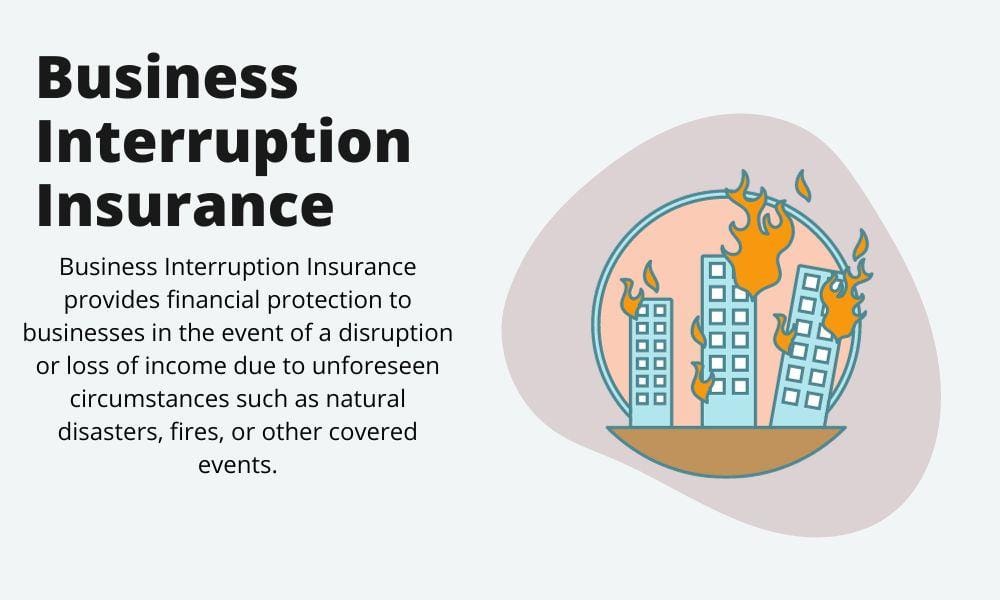
A business owners policy BOP bundles General Liability and Commercial Property insurance together at a discounted rate. It typically includes business interruption insurance, which replaces lost income if your business is forced to close temporarily due to a covered peril (like a fire or windstorm).
-
Who Needs It: Small to medium-sized businesses (SMBs) with physical assets, storefronts, or offices that meet specific low-risk criteria set by insurers.
Professional Liability Insurance (PL)
Also known as Errors and Omissions insurance (E&O), this policy protects your business if a client claims your professional advice, services, or negligence caused them financial harm. It covers legal defense costs and settlements.
-
Who Needs It: Consultants, accountants, IT professionals, real estate agents, architects, and anyone who provides a specialized service.
-
Keyword Focus: The professional liability insurance cost varies wildly depending on your industry. A management consultant might pay $500 annually, while a structural engineer might pay thousands due to the higher financial stakes of an error.
Workers’ Compensation Insurance
Workers compensation insurance coverage is legally mandated in almost every state (with Texas being a notable exception, though highly recommended even there) as soon as you hire your first W-2 employee. It covers medical expenses, rehabilitation costs, and a portion of lost wages if an employee is injured or falls ill on the job. It also includes employer’s liability coverage, protecting the business from employee lawsuits related to workplace injuries.
-
Who Needs It: Any business with employees.
-
2026 Insight: Insurers are heavily relying on wearable technology and AI ergonomics training to lower the frequency of claims, sometimes offering premium discounts to companies that adopt these safety tech measures.
Commercial Auto Insurance
If your business owns vehicles, or if employees use their personal vehicles for business tasks (hired and non-owned auto liability), a standard personal auto policy will not cover accidents that occur while conducting business. You need a dedicated commercial policy.
-
Who Needs It: Delivery services, tradespeople with fleets, sales teams, and transport companies.
-
Keyword Focus: Securing a competitive commercial auto insurance quote in 2026 requires clean Motor Vehicle Records (MVRs) and the implementation of fleet telematics. Insurers are battling high repair costs and litigation severity in this line.
Cyber Liability Insurance
As discussed, cyber coverage protects your business against data breaches, ransomware attacks, and cyber fraud. It covers the costs of notifying affected customers, providing credit monitoring, legal fees, public relations crisis management, and sometimes even the ransom payment itself.
-
Who Needs It: Any business that stores customer data, processes payments online, or relies on digital infrastructure to operate.
Directors and Officers Insurance (D&O)
Directors and officers insurance protects the personal assets of corporate directors and officers, and their spouses, in the event they are personally sued by employees, vendors, competitors, investors, customers, or other parties, for actual or alleged wrongful acts in managing a company.
-
Who Needs It: Corporations, startups seeking venture capital funding, and non-profits looking to attract board members.
The Best Business Insurance Companies of 2026
We have evaluated the top carriers in the market based on financial strength (AM Best Ratings), customer satisfaction (J.D. Power, Trustpilot), digital capabilities, policy flexibility, and claims handling. Here are the premier business insurance companies dominating the market in 2026.
1. The Hartford: Best Overall for Small to Mid-Sized Businesses
The Hartford remains a titan in the commercial insurance space. With centuries of experience, they have refined their offerings to provide comprehensive, easily understandable coverage for a vast array of industries.
-
AM Best Rating: A+ (Superior)
-
Top Coverages: Business Owner’s Policy (BOP), Workers’ Compensation, Commercial Auto.
-
Pros: Outstanding customer service record, excellent bundle options, specialized coverage enhancements for tech and healthcare.
-
Cons: Not always the absolute cheapest option for micro-businesses; some complex policies still require an agent to finalize.
-
Why they win in 2026: The Hartford’s data-driven underwriting allows them to price BOPs extremely accurately, rewarding safe businesses with highly competitive rates.
2. NEXT Insurance: Best for Digital-First Businesses and Fast Quotes
NEXT Insurance (part of the ERGO Group) has revolutionized the way small businesses buy insurance. Their platform is 100% digital, utilizing AI to assess risk and issue policies in under 10 minutes.
-
AM Best Rating: A+ (Superior – via Munich Re backing)
-
Top Coverages: General Liability, Professional Liability, Workers’ Comp.
-
Pros: Instant online quoting and binding, immediate access to digital Certificates of Insurance (COIs), highly tailored policies for over 1,300 professions.
-
Cons: Strict underwriting guidelines mean high-risk industries (like heavy manufacturing or complex construction) will not qualify.
-
Why they win in 2026: If you need a small business insurance quote online instantly because a client is demanding a COI before you can start work tomorrow, NEXT is unmatched.
3. Chubb: Best for High-Value, High-Risk, and Global Businesses
Chubb is the world’s largest publicly traded property and casualty insurance company. They specialize in sophisticated risk engineering and cater to businesses with complex needs, massive revenue, or international footprints.
-
AM Best Rating: A++ (Superior)
-
Top Coverages: Directors & Officers (D&O), Cyber Enterprise Risk Management, Excess Casualty/Umbrella, Ocean Marine.
-
Pros: Unparalleled financial strength, global reach, bespoke coverage options, top-tier risk management services.
-
Cons: Premiums reflect their premium service; generally not suitable for standard solopreneurs or small local retailers.
-
Why they win in 2026: Chubb’s capacity to handle massive, complex cyber and D&O risks sets them apart in a market where other carriers are retreating from severity-exposed lines.
4. Travelers: Best for Commercial Property and Construction
Travelers is instantly recognizable by its red umbrella logo and is renowned for its deep expertise in specific industry verticals, particularly construction, manufacturing, and real estate.
-
AM Best Rating: A++ (Superior)
-
Top Coverages: Commercial Property, Inland Marine, General Liability for Contractors, Builder’s Risk.
-
Pros: Extremely strong property capacity, excellent loss control and safety training resources, dedicated construction underwriting teams.
-
Cons: Quote process is usually agent-driven; digital interface for small business is lagging behind insurtechs.
-
Why they win in 2026: In a challenging CAT-exposed property market, Travelers’ sophisticated mapping and engineering data allow them to write commercial property insurance where others simply decline.
5. Hiscox: Best for Independent Contractors and Micro-Businesses
Hiscox focuses heavily on the smallest businesses: independent contractors, freelancers, and solopreneurs. They understand the unique liabilities of the gig economy.
-
AM Best Rating: A (Excellent)
-
Top Coverages: Professional Liability (E&O), General Liability, Cyber Liability.
-
Pros: Extremely affordable starting rates for single-person LLCs, deep expertise in tech and consulting E&O, easy online quote process.
-
Cons: Lower maximum coverage limits than mega-carriers; not ideal for scaling businesses with heavy physical assets.
-
Why they win in 2026: Hiscox excels at accurately pricing errors and omissions insurance for modern, remote-first consulting and tech freelancers.
6. Progressive Commercial: Best for Commercial Auto Insurance
Progressive is the #1 commercial auto insurer in America. They cover everything from a single real estate agent’s sedan to a fleet of long-haul semi-trucks.
-
AM Best Rating: A+ (Superior)
-
Top Coverages: Commercial Auto, Trucking Insurance, Fleet Insurance.
-
Pros: Unmatched expertise in auto underwriting, significant discounts for electronic logging devices (ELDs) and telematics, broad acceptance of various vehicle types.
-
Cons: Their non-auto business policies (GL, BOP) are often brokered out to third parties.
-
Why they win in 2026: Progressive’s massive data pool from their Snapshot program allows them to price commercial auto more competitively than anyone else, making them the first stop for a commercial auto insurance quote.
7. biBERK (A Berkshire Hathaway Company): Best for Direct-to-Consumer Savings
biBERK cuts out the middleman broker, selling policies directly to the business owner online. Because they are backed by Warren Buffett’s Berkshire Hathaway, they offer immense financial stability.
-
AM Best Rating: A++ (Superior)
-
Top Coverages: Workers’ Compensation, General Liability, BOP.
-
Pros: Claims to save customers up to 20% by cutting out broker fees, rapid online binding, elite financial backing.
-
Cons: Customer service can be less personalized than working with a dedicated local agent; limited appetite for highly specialized risks.
Industry-Specific Insurance Requirements
Insurance is not one-size-fits-all. The hazards faced by a software developer are fundamentally different from those faced by a roofing contractor. Here is how insurance needs break down by industry in 2026:
Construction and Contracting
Contractors operate in a high-risk physical environment.
-
Must-Haves: General liability insurance for contractors (essential for bidding), Workers’ Compensation (high rates due to hazard level), Commercial Auto for work trucks, Builders Risk (covers the structure during construction), and Inland Marine (covers tools and heavy equipment while in transit).
-
2026 Trend: Construction firms using drone surveying and IoT sensors on job sites are seeing favorable premium adjustments from carriers.
Technology and IT Services
Tech companies face massive intangible risks.
-
Must-Haves: Technology Errors and Omissions insurance (covers claims of software failure or bad IT advice causing financial loss to a client), deep Cyber Liability insurance, and D&O insurance if backed by venture capital.
-
2026 Trend: AI developers face unique liabilities. Carriers are now drafting specific endorsements for algorithmic bias and AI hallucination liabilities under Tech E&O policies.
Healthcare and Medical
The medical field is fraught with high-stakes liability and strict regulatory compliance (HIPAA).
-
Must-Haves: Medical Malpractice (a specialized form of professional liability), General Liability, strict Cyber Liability (healthcare records are prime targets for ransomware), and Workers’ Compensation (nursing has high injury rates).
-
2026 Trend: Telehealth expansion requires policies that cover multi-state digital jurisdictions.
Retail and E-commerce
Whether brick-and-mortar or digital, moving goods involves risk.
-
Must-Haves: A Business Owners Policy BOP (covers slip-and-falls in-store and inventory damage), Product Liability (if a product you sell causes injury), and Cyber Liability (for e-commerce payment processing).
-
2026 Trend: Supply chain disruption coverage is highly sought after as global trade faces geopolitical fragmentation.
Professional Services (Consultants, Lawyers, Accountants)
Your advice is your product.
-
Must-Haves: Professional liability insurance, General Liability (for office visits), and Cyber Liability.
-
2026 Trend: As regulatory scrutiny increases globally, accountants and compliance consultants are seeing their professional liability insurance cost rise, necessitating cleaner operational controls.
Cost Analysis: Pricing Your Premiums in 2026
One of the most common questions is: “How much does business insurance cost?” Because every business is unique, providing a single number is impossible. However, we can break down the primary factors that influence your premiums in 2026 and provide baseline estimates.
Factors Influencing Your Premium
-
Industry Classification: Insurers use NAICS (North American Industry Classification System) codes to base your baseline risk. A roofing company will inherently pay vastly more for Workers’ Comp and GL than a graphic design firm.
-
Revenue and Payroll: Higher revenue means more business activity, which increases exposure. Workers’ Comp is directly calculated as a rate per $100 of payroll.
-
Location: Commercial property insurance in hurricane-prone Florida or wildfire-exposed California will cost significantly more than in Ohio. Litigation venues also matter; casualty insurance is more expensive in states known for massive jury awards (like New York or Illinois).
-
Claims History: Your “loss run” report is your insurance credit score. A clean history guarantees the best rates. Frequent claims will cause rates to skyrocket or lead to non-renewal.
-
Coverage Limits and Deductibles: Higher limits ($2M vs $1M) increase costs. Higher deductibles (what you pay out of pocket before insurance kicks in) lower your premium.
-
Risk Controls: Do you have security cameras? Driver training programs? Fire sprinklers? Multi-factor authentication? Documented safety programs heavily influence underwriting credits.
Average Cost Estimates (2026 Projections for Small Businesses)
-
General Liability: $40 to $80 per month.
-
Business Owner’s Policy (BOP): $50 to $120 per month.
-
Professional Liability (E&O): $50 to $150 per month (can be thousands for high-risk consulting).
-
Workers’ Compensation: $40 to $200+ per month, per employee (highly dependent on the job role).
-
Commercial Auto: $150 to $300 per month, per vehicle.
-
Cyber Liability: $100 to $300 per month.
Note: The best way to determine your exact cost is to get a small business insurance quote online and compare at least three different carriers.
Strategic Guide: How to Choose the Right Provider
Selecting an insurance company is about forming a long-term financial partnership. Here is a step-by-step methodology to ensure you make the right choice in 2026.
Step 1: Assess Your Unique Risks
Before contacting anyone, map out your operations. Do you host clients at your office? Do you process credit cards? Do employees drive for work? Understanding your exposures dictates the types of policies you need.
Step 2: Decide Between Direct, Captive Agent, or Independent Broker
-
Direct/Insurtech (e.g., NEXT, biBERK): Best for fast, simple risks. You buy directly online.
-
Captive Agent (e.g., State Farm, Allstate): Best if you want a local relationship and want to bundle personal and business insurance, though they only sell one company’s products.
-
Independent Broker: Best for complex risks, mid-sized companies, or hard-to-place industries. They shop your profile across multiple carriers (like Travelers, Chubb, The Hartford) to find the best terms.
Step 3: Prioritize Financial Strength
Never buy insurance from a company that might go bankrupt before paying your claim. Always check their AM Best rating. Only consider companies rated A- (Excellent) or higher.
Step 4: Compare Coverage Terms, Not Just Price
Do not fall into the trap of buying the cheapest policy. Examine the exclusions. Does the cheaper general liability policy exclude coverage for your specific type of contractual work? Does the commercial property policy have a massive percentage deductible for windstorms? Read the fine print.
Step 5: Evaluate the Claims Process
A policy is only as good as its claims department. Research the company’s reputation for paying claims promptly. Look for carriers that offer 24/7 digital claims reporting and fast track processing for minor losses.
The Claims Process Demystified
Filing a commercial insurance claim can be stressful. Understanding the process ensures you receive the compensation you are entitled to without unnecessary delays.
-
Immediate Mitigation: Your first duty is to prevent further damage. If a pipe bursts, shut off the water. If there is a cyber breach, disconnect affected servers.
-
Prompt Reporting: Notify your carrier immediately. Delays can result in claim denial. Most carriers in 2026 offer mobile apps for instant reporting.
-
Documentation is King: Take extensive photos and videos. Keep all receipts related to the incident. If it is a liability claim, gather witness statements and preserve all related emails and contracts.
-
The Adjuster’s Role: An insurance adjuster will be assigned to investigate. They determine if the peril is covered, assess the extent of the damage, and calculate the payout based on your policy limits and deductibles.
-
Resolution and Payment: Once the adjuster completes their report and you agree on the settlement amount, the carrier will issue payment, minus your deductible. For liability claims, the insurer will handle the legal defense and settlement negotiations with the third party.
Risk Management Strategies for the Modern Business
Insurance is risk transfer; risk management is risk reduction. The best way to control your insurance costs in 2026 is to become a safer, less attractive target for claims. Carriers actively reward the following practices:
-
Implement Robust Cyber Security: Enforce MFA on all accounts, conduct monthly phishing simulations for employees, segment your network, and utilize EDR software. This is non-negotiable for securing affordable cyber insurance.
-
Adopt Telematics: If you operate vehicles, install GPS telematics devices. Monitoring harsh braking, speeding, and late-night driving allows you to coach drivers and secure massive discounts on your commercial auto insurance quote.
-
Strengthen Contracts: Work with an attorney to ensure your contracts contain strong hold-harmless agreements and require vendors/subcontractors to name your business as an “Additional Insured” on their general liability policies.
-
Physical Property Mitigation: In CAT-prone areas, upgrade roofing materials, install water leak detection sensors connected to automatic shutoff valves, and clear brush away from structures.
-
Create a Culture of Safety: For workers’ compensation, establish a formal safety committee, mandate regular ergonomic assessments, and enforce a strict return-to-work program for injured employees.
Comprehensive Business Insurance Glossary
To navigate the insurance market effectively, you must speak the language.
-
Additional Insured: A person or organization added to your liability policy, granting them coverage under your policy for specific risks arising out of your operations.
-
Aggregate Limit: The absolute maximum amount the insurer will pay for all accumulated claims during a single policy period (usually one year).
-
Certificate of Insurance (COI): A standard document that provides proof of your insurance coverage, including policy limits, types of coverage, and effective dates.
-
Deductible: The amount of money you must pay out-of-pocket before the insurance company begins to pay on a covered loss.
-
Endorsement (or Rider): An amendment added to a standard insurance policy that changes its terms, either expanding or restricting coverage.
-
Indemnify: To compensate someone for harm or loss.
-
Loss Run Report: A document generated by your insurance company detailing your claims history over a specific period (usually 3-5 years).
-
Per-Occurrence Limit: The maximum amount the insurer will pay for a single, isolated claim incident.
-
Subrogation: The process where an insurance company pays your claim, and then legally pursues the third party who actually caused the damage to recover their money.
-
Umbrella Insurance: A policy designed to provide excess liability coverage above the limits of your underlying policies (like General Liability or Commercial Auto), offering a safety net against catastrophic lawsuits.
Frequently Asked Questions (FAQ)
Q: Do I really need business insurance if my business is an LLC?
A: Yes. An LLC protects your personal assets from business debts, but it does not protect the business’s assets from lawsuits. If your LLC is sued and you have no insurance, the business could be bankrupted, and you could lose all the time and capital you invested. Furthermore, an LLC does not cover the legal defense costs, which can be staggering even if you win the case.
Q: What is the difference between General Liability and Professional Liability?
A: General liability covers physical risks: bodily injury (a customer slips) or property damage (you break a client’s window). Professional liability insurance covers financial risks arising from your intellectual advice, professional errors, or failure to deliver promised services.
Q: How can I lower my professional liability insurance cost?
A: You can lower costs by increasing your deductible, maintaining a flawless claims history, implementing strict quality control and peer-review processes within your firm, and using clear, legally vetted contracts that clearly define the scope of your work and limit your liability.
Q: Can I get a small business insurance quote online instantly?
A: Yes, for many standard, low-risk businesses. Insurtech companies like NEXT, biBERK, and Hiscox, as well as digital portals for traditional carriers like The Hartford, offer instant quoting and binding in 2026. However, if your business is in a highly specialized, hazardous, or complex industry, you will likely need to undergo manual underwriting.
Q: Is business interruption insurance worth it?
A: Absolutely. Most businesses that suffer a major property loss (like a fire) fail not because they couldn’t afford to rebuild the structure, but because they ran out of cash flow to pay rent, payroll, and taxes while the business was closed during reconstruction. Business interruption insurance replaces that lost net income.
Q: Why are commercial auto insurance quotes so high right now?
A: The commercial auto market has been notoriously unprofitable for insurers for years. Rising costs are driven by “social inflation” (massive jury verdicts in accidents involving commercial trucks), the high cost of repairing modern vehicles packed with sensors and complex electronics, and a general increase in distracted driving leading to higher accident frequency.
Q: What is Directors and Officers (D&O) insurance, and does my startup need it?
A: Directors and officers insurance protects the personal assets of the individuals running the company if they are sued for mismanaging the business. If your startup is seeking venture capital or establishing a formal board of directors, D&O is almost always a mandatory requirement by those investors to protect their interests and the board members they place.
Conclusion
Securing the optimal business insurance portfolio in 2026 requires diligence, strategic foresight, and an understanding of the rapidly evolving risk landscape. The era of simply renewing the same policy year after year without review is over. Cyber threats, complex supply chains, and a volatile legal environment demand proactive protection.
Whether you align with a digital-first innovator like NEXT Insurance for instantaneous coverage, leverage the deep industry expertise of Travelers, or rely on the robust, comprehensive solutions of The Hartford, the goal remains the same: ensuring that when the worst happens, your business has the financial backing to survive and thrive.
Take the time to evaluate your specific exposures, audit your current policies against the definitions and trends outlined in this guide, and aggressively seek multiple quotes. By treating your insurance strategy with the same rigor you apply to your sales or product development, you build an impenetrable foundation for your business’s future.