Launching a startup is a thrilling endeavor filled with innovation, late nights, and the pursuit of aggressive growth. However, amidst the excitement of product development and venture capital pitches, founders often overlook one of the most critical foundational pillars of a sustainable company: risk management. Securing the right business insurance for startups is not just a legal formality; it is a strategic imperative that protects your intellectual property, your team, your investors, and your bottom line.
In this definitive, comprehensive guide, we will dive deep into the intricate world of startup risk management. Whether you are bootstrapping a SaaS platform out of a garage or securing a Series B round for a biotech firm, understanding how to navigate startup business insurance quotes, coverage limits, and policy exclusions is vital. We will explore high-cost-per-click (CPC) industry keywords, demystify complex jargon, and provide a granular roadmap to securing the exact coverage your startup needs to scale safely.
Why Startups Cannot Afford to Ignore Business Insurance
The startup ecosystem is inherently risky. According to industry data, a significant percentage of startups fail within their first five years. While market fit and cash flow are often cited as the primary culprits, uninsured catastrophic events—such as a data breach, a devastating lawsuit, or a workplace accident—can force a promising startup into immediate bankruptcy.
The True Cost of Going Uninsured
Many founders ask, “What is the average small business insurance cost, and can I defer it until we are profitable?” This is a dangerous mindset. Deferring insurance exposes founders to severe liabilities.
-
Legal Fees: A single lawsuit, even a frivolous one, can cost tens of thousands of dollars in defense fees alone.
-
Breach of Contract: Enterprise clients and corporate partners will almost always require proof of insurance (specifically commercial general liability insurance and cyber liability insurance) before signing vendor agreements.
-
Investor Requirements: Venture capitalists (VCs) and angel investors will not fund a company that exposes their capital to unprotected risks. Securing directors and officers insurance for startups is usually a prerequisite for closing a funding round.
The Anatomy of Startup Risks
Startups face a unique matrix of risks compared to traditional small businesses:
-
High Growth, High Volatility: Rapid scaling often leads to operational gaps where mistakes happen.
-
Intellectual Property Disputes: Tech and creative startups are prime targets for copyright, trademark, and patent infringement claims.
-
Data Sensitivity: Startups often handle massive amounts of user data, making them lucrative targets for cybercriminals.
Commercial General Liability Insurance (CGL) – Your First Line of Defense
If there is one non-negotiable policy every founder must secure, it is commercial general liability insurance. Often referred to simply as “general liability,” this policy is the bedrock of any corporate risk management strategy.
What CGL Covers
Commercial General Liability protects your startup against the most common third-party claims. It is generally broken down into three primary coverage areas:
-
Third-Party Bodily Injury: If a client visits your startup’s co-working space or office and trips over a loose cable, suffering a concussion, CGL covers their medical expenses, ambulance fees, and any subsequent legal settlements if they decide to sue.
-
Third-Party Property Damage: If your startup’s employee visits a client’s headquarters and accidentally spills coffee, destroying an expensive server rack or a proprietary prototype, your general liability policy will cover the cost to repair or replace the damaged property.
-
Personal and Advertising Injury: This is arguably the most crucial facet of CGL for aggressive startups. It covers claims of libel, slander, defamation, and copyright infringement in your marketing materials. If your startup’s aggressive new ad campaign inadvertently mimics a competitor’s trademarked slogan, CGL covers the legal defense and settlement costs.
What CGL Does Not Cover
It is equally important to understand the exclusions of a standard general liability policy:
-
Employee injuries (requires workers compensation insurance)
-
Professional mistakes or coding errors (requires professional liability insurance)
-
Data breaches (requires cyber liability insurance)
Getting the Best Rates on CGL
When seeking startup business insurance quotes for general liability, underwriters will look at your industry, location, and foot traffic. A purely remote SaaS startup will pay significantly less for CGL than a hardware startup with a physical manufacturing and prototyping lab.
Professional Liability Insurance (Errors and Omissions)
While CGL covers physical accidents, professional liability insurance (often called Errors & Omissions or E&O insurance) covers financial losses caused by your services or advice. For tech startups, consultants, marketing agencies, and SaaS providers, this policy is absolutely essential.
The Mechanics of E&O Coverage
If your startup provides a service, develops software, or offers professional advice, you are exposed to claims of negligence, misrepresentation, or failure to deliver promised results.
Real-World Startup Scenarios:
-
The SaaS Crash: You run a B2B SaaS startup that manages inventory for e-commerce brands. A bug in your latest code deployment causes the platform to crash on Black Friday. Your clients lose millions in potential revenue and sue your startup for negligence and breach of contract. Errors and omissions insurance coverage steps in to pay for your legal defense and the damages awarded to the clients.
-
The Consulting Misstep: Your growth-hacking consultancy advises a client to pivot their marketing strategy. The strategy fails spectacularly, and the client sues you, claiming your professional advice was fundamentally flawed and caused them financial ruin.
Technology Errors and Omissions (Tech E&O)
For software developers and IT startups, a specialized subset called Tech E&O is required. Standard professional liability might not adequately cover the nuances of software failure. Tech E&O specifically addresses claims arising from coding errors, implementation failures, and system integrations that cause third-party financial harm.
When analyzing professional liability insurance for consultants and tech founders, policies are typically written on a “claims-made” basis. This means the policy must be active both when the error occurred and when the claim is officially filed against you.
Cyber Liability Insurance – Navigating the Digital Minefield
In the modern digital economy, data is more valuable than oil. Consequently, cyberattacks are the fastest-growing threat to startups worldwide. Cyber liability insurance is no longer a luxury; it is a critical survival tool. Many startups mistakenly believe their cloud provider (like AWS or Google Cloud) bears all the liability for a data breach. Under the shared responsibility model, you, the startup, are ultimately responsible for securing the data you collect.
First-Party vs. Third-Party Cyber Coverage
A robust cyber liability policy is bifurcated into two main areas:
1. First-Party Coverage (Your Direct Losses):
-
IT Forensic Costs: Hiring cybersecurity experts to identify the source of the breach, patch the vulnerability, and determine exactly whose data was compromised.
-
Notification Costs: Legally mandated costs to notify affected customers and regulatory bodies about the breach.
-
Credit Monitoring: Providing free credit monitoring services to customers whose personally identifiable information (PII) was exposed.
-
Ransomware/Cyber Extortion: If a hacker encrypts your databases and demands Bitcoin, this coverage can help cover the ransom payment (where legally permissible) and the cost of hostage negotiators.
-
Business Interruption: Covers the revenue lost while your systems were down and your startup was unable to operate due to the hack.
2. Third-Party Coverage (Liability to Others):
-
Network Security Liability: If a hacker uses your compromised systems to launch an attack on one of your enterprise clients, they will sue you. This covers the legal defense and settlements.
-
Privacy Liability: Covers lawsuits from customers whose data was stolen and who have suffered identity theft or financial harm as a result.
Understanding Cyber Liability Insurance Cost
The cyber liability insurance cost is highly volatile and heavily dependent on your startup’s cybersecurity posture. Underwriters will scrutinize your data handling practices. To secure favorable startup business insurance quotes for cyber, your startup must demonstrate:
-
Multi-Factor Authentication (MFA) implemented across all systems.
-
Routine employee phishing training.
-
Encrypted databases and secure backups separated from the main network.
-
An established Incident Response Plan (IRP).
Directors and Officers (D&O) Insurance – Unlocking Venture Capital
As your startup matures and you begin to seek outside capital from angel investors or venture capital firms, you will inevitably encounter the requirement for directors and officers insurance for startups.
The Fiduciary Duty of Founders
When you accept money from investors, you and your board of directors take on a fiduciary duty to act in the best financial interests of the company and its shareholders. If investors believe that the founders or the board mismanaged funds, made grossly negligent strategic decisions, or breached their fiduciary duties, they can sue the directors and officers personally.
Without D&O insurance, founders’ personal assets—their homes, savings accounts, and personal investments—are on the line.
What D&O Insurance Covers
Directors and officers insurance protects the personal assets of corporate directors and officers, and their spouses, in the event they are personally sued by employees, vendors, competitors, investors, customers, or other parties, for actual or alleged wrongful acts in managing a company.
Common claims include:
-
Misrepresentation of company financials in pitch decks.
-
Breach of fiduciary duty resulting in financial loss.
-
Failure to comply with workplace laws.
-
Theft of intellectual property from a competitor (e.g., if a newly hired executive brought proprietary code from their previous employer).
Side A, Side B, and Side C Coverage
A standard D&O policy is structured in three parts:
-
Side A: Protects the individual directors and officers when the startup cannot (or will not) indemnify them (e.g., in the event of corporate bankruptcy).
-
Side B: Reimburses the startup when it indemnifies its directors and officers (corporate reimbursement).
-
Side C (Entity Coverage): Protects the startup itself if it is named in a lawsuit alongside the directors and officers.
VCs almost universally require D&O coverage before transferring funds for a Series A round, as they will be placing their own partners on your startup’s board of directors and want their partners’ personal assets protected.
Workers’ Compensation Insurance – Navigating State Mandates
As soon as you hire your first W-2 employee (and in some states, even 1099 contractors depending on the labor laws), you are legally obligated to understand workers compensation insurance requirements. Unlike general liability, which is technically optional (though highly recommended), workers’ comp is mandated by state law in nearly every U.S. jurisdiction.
The Grand Bargain of Workers’ Comp
Workers’ compensation represents a “grand bargain” between employers and employees. The employee receives guaranteed medical care and wage replacement if they are injured on the job, regardless of who was at fault. In exchange, the employee generally forfeits the right to sue the startup for negligence related to the injury.
What is Covered?
If a software engineer develops severe carpal tunnel syndrome, or a warehouse worker at your e-commerce startup injures their back lifting a prototype, workers’ comp covers:
-
Medical expenses, hospital visits, and physical therapy.
-
Lost wages during the recovery period (typically a percentage of their standard salary).
-
Disability benefits (temporary or permanent).
-
Death benefits and funeral costs if the worst occurs.
Calculating Workers Compensation Insurance Cost
The cost of workers’ compensation is heavily regulated and formulaic. It is calculated based on:
-
Classification Codes: Every job is assigned a risk code. The rate for a clerical coder is exponentially lower than the rate for a construction worker or a delivery driver.
-
Payroll: Your premium is a rate applied per $100 of payroll.
-
Experience Modification Rate (EMR): This is a multiplier based on your historical claims data. A safe startup with no claims will have an EMR of 1.0 (or lower, resulting in a discount). A startup with frequent accidents will see their EMR rise above 1.0, drastically increasing their premiums.
Failing to meet state workers compensation insurance requirements can result in massive fines, forced business closures, and even criminal charges for founders.
Employment Practices Liability Insurance (EPLI) – Managing Human Capital Risk
As your startup scales from a small founding team to a larger enterprise, interpersonal dynamics become more complex, and human resources (HR) risks multiply. Employment practices liability insurance (EPLI) is designed to protect your startup against claims made by employees alleging that their legal rights as employees of the company have been violated.
The Scope of EPLI Coverage
Startups, known for their informal cultures and rapid hiring processes, are particularly vulnerable to employment-related lawsuits. EPLI covers legal defense costs and settlements or judgments for claims involving:
-
Wrongful Termination: An employee claims they were fired without cause or in retaliation.
-
Discrimination: Claims based on age, sex, race, religion, color, or national origin (violations of Title VII of the Civil Rights Act).
-
Sexual Harassment: Hostile work environment claims.
-
Breach of Employment Contract: Disputes over equity vesting, bonuses, or severance packages.
-
Failure to Promote: Allegations of favoritism or bias in career advancement.
Even if an employment claim is entirely baseless, the cost of defending the startup in court can easily exceed $100,000. EPLI ensures that a disgruntled ex-employee cannot bankrupt your startup through legal attrition.
The Business Owner’s Policy (BOP) – The Ultimate Startup Bundle
For early-stage startups looking to optimize their small business insurance cost, purchasing standalone policies can be prohibitively expensive. Enter the Business Owner’s Policy (BOP).
What is a BOP?
A BOP is an insurance package that combines several fundamental coverages into a single, cost-effective policy designed specifically for small to medium-sized businesses with low-risk profiles. A standard BOP typically bundles:
-
Commercial General Liability Insurance (As detailed in Chapter 2).
-
Commercial Property Insurance: Protects your physical assets—computers, servers, office furniture, inventory, and the building itself (if you own it) from fire, theft, vandalism, and certain natural disasters.
-
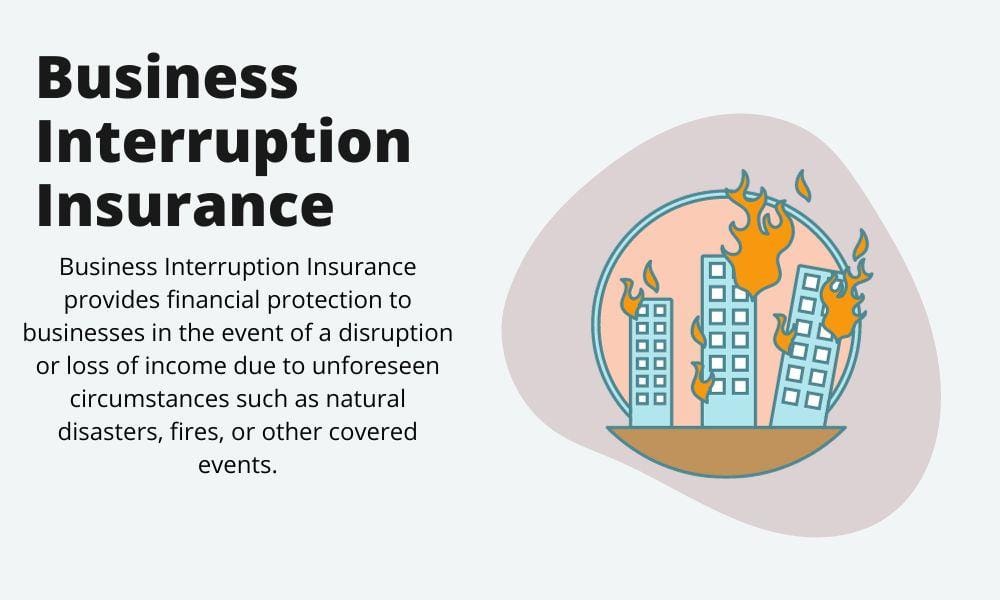
Business Interruption Insurance: If a covered peril (like a fire) destroys your office and halts operations, this coverage replaces your lost net income and pays for continuing operating expenses (like payroll and rent) while you rebuild.
Why Startups Love BOPs
Insurance carriers offer BOPs at a discounted rate compared to buying the policies individually. It is the most efficient way to secure foundational coverage. However, highly specialized startups (like biotech firms handling hazardous materials or heavy manufacturing startups) may not qualify for a standard BOP and will need customized, standalone policies.
Product Liability Insurance – For Hardware and Consumer Goods Startups
If your startup manufactures, distributes, or sells a physical product, commercial general liability insurance might not be sufficient. You need specialized Product Liability Insurance.
The Risk of Physical Goods
Whether you are building the next smart-home device, formulating a new organic beverage, or 3D-printing medical equipment, physical products carry the risk of causing bodily injury or property damage to the end-user.
-
Design Defects: A flaw in the blueprint of your product makes it inherently dangerous (e.g., a lithium-ion battery in your startup’s drone design is prone to overheating and catching fire).
-
Manufacturing Defects: A flaw that occurs during the production process (e.g., a batch of your startup’s energy bars is contaminated with a toxic substance).
-
Marketing Defects (Failure to Warn): Inadequate safety warnings or instructions provided with the product.
Product liability insurance covers the legal defense, settlements, and medical costs associated with these claims. For startups sourcing components overseas, this coverage is absolutely vital, as you can still be held liable in domestic courts for defects in foreign-made parts.
Key Person Insurance – Safeguarding the Brain Trust
Startups are uniquely dependent on their founders and a few key technical experts. If the visionary CEO or the brilliant Lead Architect suddenly passes away or becomes permanently disabled, the startup could collapse overnight.
Life Insurance for the Startup
Key Person Insurance (formerly known as Key Man Insurance) is a standard life insurance or disability policy taken out by the startup on the life of a vital employee.
-
The Policyholder: The startup pays the premiums.
-
The Beneficiary: The startup receives the death benefit.
How the Capital is Used
If a tragedy occurs, the tax-free payout from the key person policy provides an immediate influx of cash to the startup. This capital is used to:
-
Keep the business running and reassure panicking investors.
-
Pay for the expensive and time-consuming process of executing an executive search to find a replacement.
-
Pay off debts or negotiate a favorable sale or liquidation of the company if it cannot continue without the founder.
Investors heavily favor—and often require—key person insurance on the founders before injecting substantial capital.
How to Secure the Best Startup Business Insurance Quotes
Navigating the insurance marketplace can be daunting for founders accustomed to frictionless SaaS products. The insurance industry still relies heavily on traditional underwriting processes, though “Insurtech” startups are changing the landscape.
Insurtechs vs. Traditional Brokers
When seeking startup business insurance quotes, founders have two primary avenues:
-
Insurtech Platforms (Direct-to-Consumer): Companies like Next Insurance, Embroker, and Vouch have digitized the underwriting process. They use algorithms to assess risk and can provide quotes for standard policies (like CGL and BOPs) in minutes. This is ideal for straightforward, low-risk software or consulting startups.
-
Specialty Insurance Brokers: If your startup operates in a highly regulated or complex space (e.g., Fintech, MedTech, autonomous vehicles), algorithms will fail you. You need a human broker who specializes in your industry. A broker acts as your advocate, negotiating with multiple carriers (like Chubb, Hiscox, or Travelers) to build a custom portfolio that addresses obscure risks and ensures you have adequate errors and omissions insurance coverage.
The Application Process
To get accurate quotes, be prepared to provide extensive documentation:
-
Pitch decks and business plans.
-
Projected revenue and payroll for the next 12 months.
-
Copies of standard customer contracts and terms of service.
-
Details on your tech stack and cybersecurity protocols.
-
Resumes of the founding team.
Crucial Advice: Never lie or exaggerate on an insurance application to lower your premiums. This is considered insurance fraud. If you have a claim and the carrier discovers you misrepresented your revenue or risk profile, they will deny the claim and cancel your policy, leaving your startup financially ruined.
Deconstructing Small Business Insurance Cost Factors
Founders obsessed with burn rate frequently ask how to minimize their insurance premiums. Understanding the underwriting variables is the first step to controlling costs.
Primary Drivers of Premium Costs
-
Industry Risk Profile: A B2B SaaS company managing marketing analytics is low risk. A Fintech startup managing millions in consumer crypto wallets is astronomically high risk. Your NAICS code heavily dictates your baseline premium.
-
Revenue and Payroll: Insurance is often priced as a function of scale. The more revenue you generate, the wider your exposure footprint, and the higher your premiums. Similarly, higher payroll means higher workers compensation insurance costs.
-
Location: Startups in highly litigious states (like California or New York) will pay higher premiums for liability coverages. Property insurance rates are dictated by local risks (e.g., hurricane zones, earthquake faults).
-
Coverage Limits and Deductibles: A policy with a $\$2\text{M}$ limit will cost more than a policy with a $\$1\text{M}$ limit. Conversely, electing a higher deductible (the amount you pay out of pocket before insurance kicks in) will lower your annual premium. Formulaic representation of risk retention: Let $P$ be the premium, $L$ be the coverage limit, and $D$ be the deductible. Generally, $P \propto \frac{L}{D}$.
-
Claims History: If your startup has a history of data breaches or workplace accidents, carriers will view you as a high-risk entity and dramatically increase your rates, or refuse to insure you altogether.
Industry-Specific Insurance Profiles for Startups
A “one size fits all” approach to insurance is a recipe for disaster. Different verticals require entirely different risk management strategies.
1. The SaaS / Software Startup
Primary Risks: Code failure, data breaches, intellectual property infringement.
Essential Policies:
-
Technology Errors & Omissions (Tech E&O): To cover software bugs causing client financial loss.
-
Cyber Liability Insurance: Mandatory for handling any user data or cloud infrastructure.
-
Commercial General Liability (CGL).
2. The Fintech / Web3 Startup
Primary Risks: Regulatory fines, massive financial fraud, cyber extortion, fiduciary breaches.
Essential Policies:
-
Directors & Officers (D&O): Critical due to immense regulatory scrutiny (SEC, FINRA).
-
Robust Cyber Liability: With maximum limits for first-party extortion and third-party financial loss.
-
Crime Insurance / Fidelity Bonds: Protects against employee theft, embezzlement, or wire transfer fraud.
3. The Healthtech / MedTech Startup
Primary Risks: HIPAA violations, bodily injury from medical device failure, telemedicine malpractice.
Essential Policies:
-
Medical Malpractice / Professional Liability: Highly specialized E&O for healthcare outcomes.
-
Product Liability: If manufacturing physical devices (wearables, diagnostic tools).
-
Cyber Liability: Specifically tailored to cover HIPAA fines and penalties for ePHI (Electronic Protected Health Information) breaches.
4. The E-Commerce / DTC (Direct-to-Consumer) Startup
Primary Risks: Supply chain interruption, warehouse injuries, product defects, trademark issues.
Essential Policies:
-
Product Liability Insurance: Crucial for physical goods shipped to consumers.
-
Workers’ Compensation: High priority for warehouse and fulfillment staff.
-
Ocean Marine / Cargo Insurance: To protect inventory while it is being shipped overseas from manufacturers to domestic fulfillment centers.
The 5 Deadliest Mistakes Startups Make with Insurance
Even well-intentioned founders can make critical errors when structuring their insurance portfolios. Avoid these common pitfalls to ensure your startup remains resilient.
Mistake 1: Treating Insurance as a “Check-the-Box” Exercise
Many founders buy the absolute cheapest commercial general liability insurance policy they can find just to satisfy a landlord or a single client contract, ignoring the actual quality of the coverage. Cheap policies are riddled with exclusions. When a claim happens, they discover their “cheap” policy provides zero actual protection.
Mistake 2: Ignoring Cyber Insurance
Thinking “we are too small to be hacked” is a fatal error. Hackers use automated bots to scan the internet for vulnerabilities; they do not care about your company size. Startups are often preferred targets because they lack the enterprise-grade security of Fortune 500 companies but still hold valuable data.
Mistake 3: Misclassifying Employees as Contractors
To save on payroll taxes and workers compensation insurance requirements, startups often classify workers as 1099 independent contractors when they legally function as W-2 employees. If a “contractor” is injured on the job and the state labor board determines they were misclassified, the startup will face massive back-taxes, workers’ comp fraud penalties, and lawsuits.
Mistake 4: Failing to Update Coverage During Rapid Scaling
A startup might purchase a Business Owner’s Policy (BOP) when there are three founders in a garage. Two years later, they have 50 employees, international clients, and $\$10\text{M}$ in funding, but they never updated their insurance. Their coverage limits will be vastly inadequate to handle an enterprise-level lawsuit. Insurance must be reviewed quarterly during hyper-growth phases.
Mistake 5: Not Reading the Exclusions
The most important part of any insurance policy is not the declarations page; it is the exclusions section. Policies have strict carve-outs. For example, a standard professional liability insurance policy will strictly exclude bodily injury. If your software causes a machine to malfunction and injure someone, your E&O will not cover it, and your CGL might exclude software-related injuries. Bridging these gaps requires a skilled broker.
Conclusion
Securing comprehensive business insurance for startups is a hallmark of mature, visionary leadership. It signals to investors, employees, and enterprise clients that you are building a resilient organization designed for long-term survival, not just a fleeting project.
From locking down your digital perimeters with cyber liability insurance to protecting your executive team with directors and officers insurance, every policy you purchase is an investment in your startup’s valuation. Take the time to audit your risks, engage with specialized brokers, and secure the startup business insurance quotes that align with your growth trajectory.
Risk is an inescapable element of innovation. But with the right insurance portfolio, you can transfer that risk off your balance sheet, allowing you and your team to focus on what you do best: disrupting the market and building the future.