Running a business is an inherently risky endeavor. Whether you are a solo freelancer operating from a home office or a multinational corporation with hundreds of employees, your enterprise faces a daily barrage of physical, financial, and legal threats. A single lawsuit, a natural disaster, or a targeted cyberattack can wipe out years of hard work and profitability in a matter of hours. This is where comprehensive business insurance steps in as your ultimate financial safety net.
But navigating the insurance landscape can feel like walking through a maze. With so many policies, riders, and legal requirements, the most common question entrepreneurs ask is: What does business insurance cover?
In this definitive, comprehensive guide, we will break down every facet of business insurance coverage. We will explore the core policies every small business needs, dissect specialized coverage for niche industries, and explain exactly how these policies protect your bottom line. Whether you are looking for business insurance providers or trying to understand the nuances of small business public liability insurance, this guide is your one-stop resource.
The Foundation of Business Risk Management
Before diving into specific coverages, it is crucial to understand what business insurance actually is and why it functions as the cornerstone of enterprise risk management.
What is Business Insurance?
Business insurance (often referred to as commercial insurance) is a contractual agreement between your business and an insurance provider. In exchange for regular premium payments, the insurer agrees to bear the financial burden of specific, covered losses. These losses can stem from property damage, liability claims, employee injuries, or unexpected operational interruptions.
Without adequate coverage, business owners are forced to pay out-of-pocket for legal fees, medical bills, property repairs, and settlement costs. Given that the average cost of a slip-and-fall lawsuit is thousands of dollars—and commercial property damage can easily run into the millions—operating uninsured is a gamble few businesses can afford to take.
The Anatomy of an Insurance Policy
To fully grasp what your business insurance covers, you need to understand the terminology embedded in your contracts:
-
Premium: The amount you pay (usually monthly or annually) to keep your policy active. High-risk industries generally face higher premiums.
-
Deductible: The out-of-pocket amount your business must pay toward a claim before the insurance provider’s coverage kicks in.
-
Coverage Limit: The maximum amount the insurance company will pay for a covered loss. If a lawsuit settlement exceeds your coverage limit, your business is responsible for the difference.
-
Exclusions: Specific situations, events, or perils that the policy explicitly does not cover. For example, a standard property policy usually excludes flood damage.
General Liability Insurance (The First Line of Defense)
If you only purchase one type of commercial policy, it should be General Liability Insurance. It is the most fundamental policy offered by business insurance providers and serves as the primary shield against the most common third-party claims.
What General Liability Insurance Covers
1. Third-Party Bodily Injury
If a customer, vendor, or innocent bystander is injured on your business premises, general liability covers the fallout. For example, if a client slips on a wet floor in your retail store and breaks their arm, this policy helps pay for their immediate medical expenses, hospital bills, and rehabilitation costs. If they decide to sue your business for negligence, the policy covers your legal defense fees, court costs, and any eventual settlements or judgments.
2. Third-Party Property Damage
General liability also steps in if you or your employees damage someone else’s property while conducting business operations. Imagine you run a landscaping business and a stray rock from a lawnmower shatters a client’s expensive bay window. Or, you are a consultant visiting a client’s office and you accidentally spill coffee on their high-end server equipment. This coverage pays to repair or replace the damaged property, preventing a simple accident from becoming a major financial dispute.
3. Personal and Advertising Injury
In the modern business landscape, words can be just as damaging as physical accidents. General liability covers non-physical injuries, including:
-
Libel and Slander: Claims that your business made false and damaging statements about a competitor.
-
Copyright Infringement: Lawsuits alleging you used copyrighted images, text, or music in your marketing materials without permission.
-
Invasion of Privacy: Claims that your business unlawfully exposed someone’s private information.
What It Does NOT Cover
It is equally important to know the limitations. General liability does not cover employee injuries (which requires Workers’ Compensation), auto accidents (which requires Commercial Auto Insurance), or mistakes made in your professional services (which requires Professional Liability Insurance).
Commercial Property Insurance
Physical assets are the lifeblood of many businesses. From the building you operate in to the inventory on your shelves, your tangible assets require robust protection. Commercial Property Insurance is designed to repair or replace your business property when it is damaged, destroyed, or stolen.
What Commercial Property Insurance Covers
1. The Building and Physical Structure
Whether you own the building or are responsible for its upkeep under a commercial lease, this policy covers damage to the physical structure. This includes the roof, walls, foundations, and built-in fixtures. Covered perils typically include fire, lightning, windstorms, hail, and vandalism.
2. Business Personal Property (Contents)
This is where coverage gets granular. Commercial property insurance protects the items inside your building, including:
-
Furniture and Fixtures: Desks, chairs, shelving units, and display cases.
-
Equipment and Machinery: Manufacturing equipment, forklifts, cash registers, and kitchen appliances for restaurants.
-
Technology: Computers, servers, point-of-sale systems, and routers needed for your business internet.
-
Inventory and Stock: The raw materials you use to create products, as well as the finished goods ready for sale.
3. Property of Others
If you temporarily hold property belonging to your customers (for example, you run an electronics repair shop or a dry cleaner), your commercial property policy can cover damage to those items while they are in your care, custody, and control.
The “All-Risk” vs. “Named Peril” Distinction
When reviewing policies, you will encounter two primary structures:
-
Named Peril Policies: Only cover damage caused by the specific events listed in the policy (e.g., fire, theft, wind). If it isn’t listed, it isn’t covered.
-
All-Risk (Open Peril) Policies: Cover all physical loss or damage unless the specific cause is explicitly excluded in the policy text. This is generally the broader, safer option for businesses.
Business Interruption Insurance (Business Income Coverage)
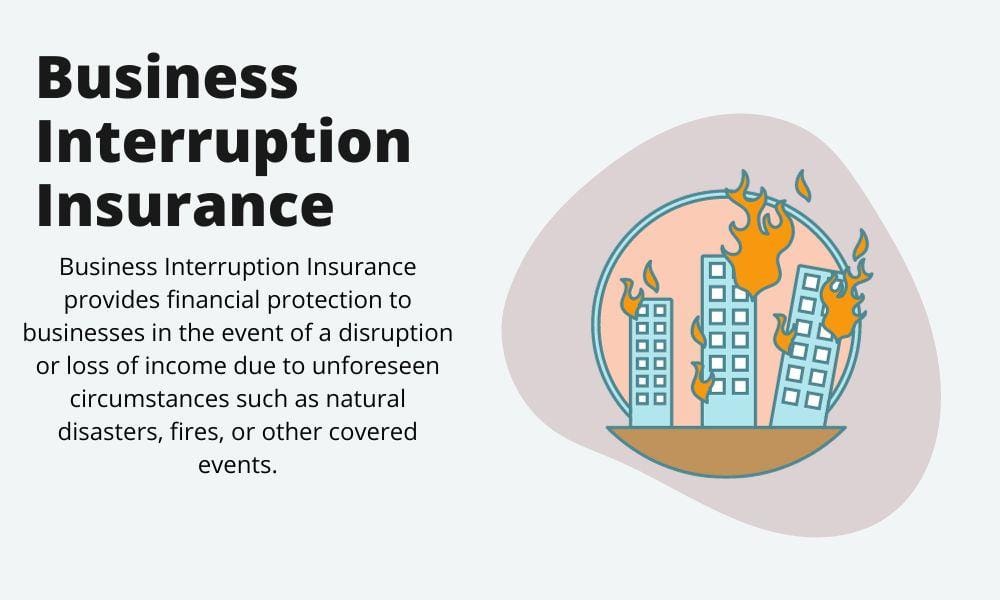
What happens if a massive fire destroys your warehouse? Commercial property insurance will pay to rebuild the structure and replace the inventory, but the rebuilding process could take six months. During that half-year, your business is generating zero revenue, yet you still have bills to pay.
Business Interruption Insurance (also known as Business Income Insurance) is the financial bridge that keeps your company alive during temporary closures caused by a covered property loss.
What Business Interruption Insurance Covers
1. Lost Net Income
The policy reimburses your business for the net profit it would have earned had the disaster not occurred, based on your past financial records and revenue projections.
2. Ongoing Operating Expenses
Even when your doors are closed, financial obligations do not stop. This coverage helps pay for:
-
Commercial mortgage or rent payments.
-
Property taxes and insurance premiums.
-
Interest on business loans.
-
Payroll to retain key employees while the business is closed.
3. Extra Expense Coverage
Often included or added as a rider, “Extra Expense” coverage pays for the additional costs incurred to minimize the shutdown time. For example, if you need to rent a temporary office space, lease temporary equipment, or pay for expedited shipping of replacement inventory to keep operations running, this policy covers those premium costs.
Professional Liability Insurance (Errors & Omissions)
If your business provides a service, offers professional advice, or handles sensitive client data, General Liability is not enough. You are exposed to lawsuits regarding the quality and accuracy of your work. This is where Professional Liability Insurance—frequently referred to as Errors and Omissions (E&O) insurance—becomes critical.
What Professional Liability Insurance Covers
1. Professional Negligence and Mistakes
Even the most seasoned professionals make errors. If an accountant makes a clerical error that results in a massive tax penalty for a client, or if an architect miscalculates a load-bearing wall leading to project delays, they can be sued for negligence. E&O insurance covers the legal defense and any resulting financial judgments.
2. Breach of Duty and Misrepresentation
Clients hire you based on the promise that you will act in their best interest and deliver specific results. If a client claims you failed to deliver the services promised in your contract, or that you misrepresented your capabilities, professional liability steps in.
3. Inaccurate Advice
Consultants, financial advisors, and marketing agencies sell their expertise. If a client implements your advice and subsequently suffers a massive financial loss, they may sue you to recoup those losses. E&O coverage protects you against these claims, regardless of whether the claim is ultimately proven true in court.
Industries That Desperately Need E&O
While almost any service provider can benefit, this coverage is practically mandatory (and often legally required) for:
-
Medical professionals (Medical Malpractice is a specific form of E&O).
-
Lawyers and legal consultants.
-
Real estate agents and brokers.
-
IT consultants and software developers.
-
Accounting and financial firms.
Workers’ Compensation Insurance
Employees are your most valuable asset, but the workplace can be a hazardous environment. Whether it’s a construction worker falling from scaffolding or an office manager developing carpal tunnel syndrome, occupational injuries are an inevitable risk.
Workers Compensation Insurance is not just a good idea; in nearly every jurisdiction, it is a strict legal requirement as soon as you hire your first W-2 employee.
What Workers’ Compensation Covers
1. Medical Expenses
If an employee is injured on the job or develops a work-related illness, workers’ comp covers their medical bills. This includes emergency room visits, surgeries, prescription medications, physical therapy, and ongoing medical equipment (like wheelchairs or crutches).
2. Lost Wages (Disability Benefits)
When an employee requires a significant amount of time off to recover from a workplace injury, they cannot earn their normal paycheck. Workers’ compensation provides partial wage replacement (usually around two-thirds of their average weekly wage) during their recovery period.
3. Rehabilitation and Retraining
If an injury is severe enough that the employee can no longer perform their previous job duties, the policy may cover vocational rehabilitation. This pays for retraining and education so the employee can re-enter the workforce in a different capacity.
4. Death Benefits
In the tragic event of a fatal workplace accident, workers’ compensation provides a death benefit to the deceased employee’s dependents. This typically includes covering funeral and burial costs, as well as ongoing financial support for the surviving family members.
5. Employer Liability
Workers’ compensation is considered an “exclusive remedy,” meaning that if an employee accepts workers’ comp benefits, they generally waive their right to sue the employer for negligence. However, if an employee does file a lawsuit alleging that the employer’s gross negligence caused the injury, the Employer Liability portion of the policy covers the legal defense fees and settlements.
Commercial Auto Insurance
If your business owns vehicles, or if your employees use their personal vehicles for business purposes, a standard personal auto policy will not protect you. Personal auto policies explicitly exclude coverage for accidents that occur during commercial activities.
To secure comprehensive protection, you must secure Commercial Auto Insurance. (Fun fact for marketers: phrases like auto insurance quotes and commercial auto insurance consistently rank among the highest CPC keywords on Google due to the immense value of these policies).
What Commercial Auto Insurance Covers
1. Auto Liability
If an employee driving a company truck causes an accident, your business is legally liable for the resulting damage. Auto liability covers the bodily injury and medical bills of the other driver and passengers, as well as the costs to repair or replace their damaged vehicle.
2. Physical Damage (Collision and Comprehensive)
-
Collision Coverage: Pays to repair your business vehicle if it is damaged in a crash with another vehicle or object, regardless of who is at fault.
-
Comprehensive Coverage: Pays for damage to your company vehicles caused by non-collision events, such as theft, vandalism, fire, hail, or hitting an animal.
3. Uninsured/Underinsured Motorist Coverage
If your employee is hit by a driver who either does not have insurance or does not have enough insurance to cover the medical bills and property damage, this coverage steps in to pay the difference, protecting your company’s assets.
4. Hired and Non-Owned Auto Liability (HNOA)
This is a critical, often-overlooked endorsement. If an employee uses their personal car to run a business errand (like dropping off a package at the post office or driving to a client meeting) and gets into an accident, your business can be sued. HNOA provides liability coverage for vehicles your business uses but does not own, including employee-owned cars and rental vehicles.
Cyber Liability and Data Breach Insurance
In an era dominated by cyber security threats, data is often a company’s most valuable—and most vulnerable—asset. Small businesses are frequently targeted by hackers because they typically lack the enterprise-grade security infrastructure of larger corporations. A single ransomware attack or data breach can bankrupt a small business due to regulatory fines, legal fees, and reputational damage.
Data Breach Insurance (and broader Cyber Liability Insurance) is essential for any business that handles sensitive customer data, processes credit cards, or relies on cloud-based technology.
What Cyber Insurance Covers
1. First-Party Response Costs
When a breach occurs, the immediate aftermath is chaotic and expensive. Cyber insurance covers the direct costs your business incurs, including:
-
IT Forensics: Hiring cybersecurity experts to investigate the breach, identify the vulnerability, and secure the network.
-
Ransomware Payments: In some cases, policies will cover the cost of paying extortion demands to hackers to unlock paralyzed systems.
-
Customer Notification: The law requires you to notify affected customers whose data has been compromised. The policy covers the mailing, call center, and public relations costs.
-
Credit Monitoring: Providing free credit monitoring services to the victims of the breach.
2. Third-Party Liability
If your clients’ personal data (Social Security numbers, credit card details, medical records) is stolen, they will likely sue you for failing to protect their information. Cyber liability covers your legal defense costs, court judgments, and regulatory fines levied by government entities.
Specialized and Niche Coverages
Beyond the standard suite of policies, many businesses require highly specialized coverage tailored to their specific operational risks.
Employment Practices Liability Insurance (EPLI)
While workers’ comp covers physical injuries, EPLI covers the legal and financial fallout of employee rights violations. If an employee (or former employee) sues your business for wrongful termination, sexual harassment, discrimination, breach of employment contract, or failure to promote, EPLI covers your legal defense and settlement costs.
Commercial Umbrella Insurance
Every liability policy has a maximum coverage limit. But what happens if you face a catastrophic lawsuit? If your general liability policy has a $1 million limit, but a judge awards a plaintiff $2.5 million in a devastating bodily injury case, your business is on the hook for the remaining $1.5 million.
Commercial Umbrella Insurance acts as a massive financial safety net. It sits on top of your underlying liability policies (General Liability, Commercial Auto, Employers’ Liability) and provides additional coverage limits in increments of $1 million, ensuring a massive lawsuit doesn’t force your business into bankruptcy.
Product Liability Insurance
If you manufacture, distribute, or sell physical goods, you are responsible for their safety. If a product malfunctions and causes injury or property damage (e.g., a defective battery catches fire, or a food product causes widespread illness), product liability covers the resulting legal claims and compensation.
How Much Does Business Insurance Cost?
When searching for the right policies among various business insurance providers, cost is always a primary concern. The reality is that there is no “one-size-fits-all” price. Insurance premiums are meticulously calculated by underwriters based on a variety of risk factors:
-
Industry and Risk Level: A roofing contractor faces a significantly higher risk of workplace injuries and property damage than an IT consultant working from a home office. Therefore, the roofer’s premiums will be exponentially higher.
-
Business Size and Payroll: The more employees you have, the higher your Workers’ Compensation and Employment Practices Liability premiums will be.
-
Location: Businesses located in areas prone to natural disasters (like coastal hurricane zones) will pay more for commercial property insurance. Furthermore, regions with high litigation rates will see higher liability premiums.
-
Claims History: Just like personal auto insurance, if your business has a history of frequent insurance claims, providers will view you as a high-risk client and charge higher premiums.
-
Coverage Limits and Deductibles: Choosing higher coverage limits increases your premium, while opting for a higher deductible (the amount you pay out-of-pocket before insurance kicks in) will lower your monthly premium.
Conclusion
Understanding what business insurance covers is the first step toward building a resilient, long-lasting enterprise. The modern business environment is fraught with peril, from sophisticated cyber attacks to simple slip-and-fall accidents. Relying on luck or assuming “it won’t happen to me” is not a valid business strategy.
By carefully evaluating your risks, consulting with reputable business insurance providers, and securing a customized blend of General Liability, Commercial Property, Workers’ Compensation, and specialized policies, you can protect your financial future. Remember, business insurance is not just an overhead expense; it is a critical investment in the survival and continuity of your life’s work. Ensure your legacy is protected today.