Navigating the complex world of commercial insurance is one of the most critical responsibilities for any business owner, founder, or corporate executive. Whether you are launching a lean tech startup, running a bustling retail storefront, or managing a large-scale manufacturing enterprise, securing the right coverage is non-negotiable. Yet, many business owners overpay for inadequate coverage simply because they do not know how to effectively compare business insurance quotes.
This comprehensive pillar guide dives deep into the high-stakes world of commercial insurance. We will explore the exact steps to evaluate policies, dissect high-value coverages like general liability insurance, workers’ compensation, and cyber liability insurance, and uncover the hidden factors that drive up your small business insurance cost.
Why You Must Compare Business Insurance Quotes Annually
The commercial insurance market is highly dynamic. Rates fluctuate based on macroeconomic factors, industry-wide claims data, and your specific business growth. Automatically renewing your policy without cross-checking the market is a guaranteed way to bleed capital.
The Financial Impact of Complacency
When you fail to compare business liability insurance quotes, you risk two catastrophic outcomes:
-
Overpaying for standard coverage: Insurance carriers frequently introduce introductory rates to acquire new customers, while slowly increasing premiums for existing policyholders (a practice known as “price optimization”).
-
Being dangerously underinsured: As your business scales—adding employees, launching new products, or acquiring new physical assets—your legacy policy may no longer cover your current risk profile.
Comparing commercial insurance quotes online allows you to leverage market competition, ensuring you secure the highest coverage limits for the lowest possible premium.
Core Policies Every Business Must Evaluate
To accurately compare quotes, you must first understand the fundamental policies that make up a robust corporate risk management portfolio. High-CPC keywords in the insurance sector frequently revolve around these specific coverages because they are legally or contractually mandated for most operations.
2.1 General Liability Insurance
General liability insurance (GLI) is the bedrock of any commercial insurance portfolio. It protects your business from third-party claims involving bodily injury, property damage, and personal or advertising injury (such as libel, slander, or copyright infringement).
-
Who Needs It: Every single business. From freelance consultants to global enterprise firms.
-
What to Look For When Comparing: Pay close attention to the aggregate limit versus the per-occurrence limit. A standard policy might offer $1 million per occurrence and a $2 million aggregate.
-
Cost Drivers: Your industry risk level, foot traffic (for retail), and past claims history heavily influence your general liability insurance cost.
2.2 Professional Liability Insurance (Errors & Omissions)
Also known as Errors and Omissions (E&O) insurance, this covers you if a client claims your professional advice, service, or negligence caused them financial harm.
-
Who Needs It: Consultants, lawyers, accountants, marketing agencies, real estate agents, and technology service providers.
-
Comparing Quotes: When reviewing a professional liability insurance quote, check whether the policy is “claims-made” or “occurrence-based.” Claims-made policies require the policy to be active both when the incident occurred and when the claim is filed.
-
Cost Drivers: The volume of clients you serve and the financial stakes of the advice you provide. A financial advisor will face a significantly higher professional liability insurance cost than a wedding photographer.
2.3 Workers’ Compensation Insurance
If you have employees, almost every state requires you to carry workers’ compensation. It covers medical expenses, rehabilitation costs, and lost wages if an employee is injured or falls ill on the job.
-
Who Needs It: Any business with W-2 employees.
-
Comparing Quotes: Because state laws heavily regulate this insurance, rates are often tied strictly to your industry classification codes (NCCI codes) and payroll. When comparing a workers compensation insurance quote, ensure the broker has classified your employees correctly. A clerical worker misclassified as a manual laborer will skyrocket your premiums.
-
Cost Drivers: Your Experience Modification Rate (EMR). An EMR of 1.0 is average; anything lower earns you a discount, while anything higher serves as a penalty for past safety failures.
2.4 Commercial Auto Insurance
Personal auto insurance explicitly excludes accidents that happen while driving for business purposes.
-
Who Needs It: Businesses that own a fleet of vehicles, or businesses where employees use their personal vehicles for company errands (which requires Hired and Non-Owned Auto coverage).
-
Comparing Quotes: A commercial auto insurance quote will vary wildly based on the radius of operation. A delivery van operating within a 50-mile radius is much cheaper to insure than a long-haul trucking operation spanning multiple states.
-
Cost Drivers: Fleet size, vehicle weight class, driver motor vehicle records (MVRs), and cargo type.
Advanced & High-Value Commercial Coverages
As businesses grow, their risk profiles become infinitely more complex. Comparing quotes at the enterprise level requires looking at specialized policies.
3.1 Cyber Liability Insurance
In 2026, data is the most valuable asset a company holds. Cyber liability insurance coverage protects businesses from the devastating financial fallout of data breaches, ransomware attacks, and phishing scams.
-
First-Party Coverage: Covers the immediate costs to your business, such as IT forensics, data restoration, ransomware extortion payments, and public relations crisis management.
-
Third-Party Coverage: Covers legal fees, regulatory fines, and settlement costs if your clients sue you for compromising their data.
-
Quote Comparison Tip: Insurers are becoming incredibly strict. To get the best rates, you must prove you have active risk mitigation: multi-factor authentication (MFA), endpoint detection and response (EDR), and regular employee training.
3.2 Directors and Officers (D&O) Insurance
D&O insurance protects the personal assets of corporate directors and officers, and their spouses, in the event they are personally sued by employees, vendors, competitors, investors, customers, or other parties, for actual or alleged wrongful acts in managing a company.
-
Who Needs It: Publicly traded companies, startups seeking venture capital (VCs will mandate it), and large non-profits.
-
Quote Comparison Tip: Look closely at the “Side A,” “Side B,” and “Side C” coverage limits to ensure both the individuals and the corporate entity are shielded.
3.3 Business Owner’s Policy (BOP)
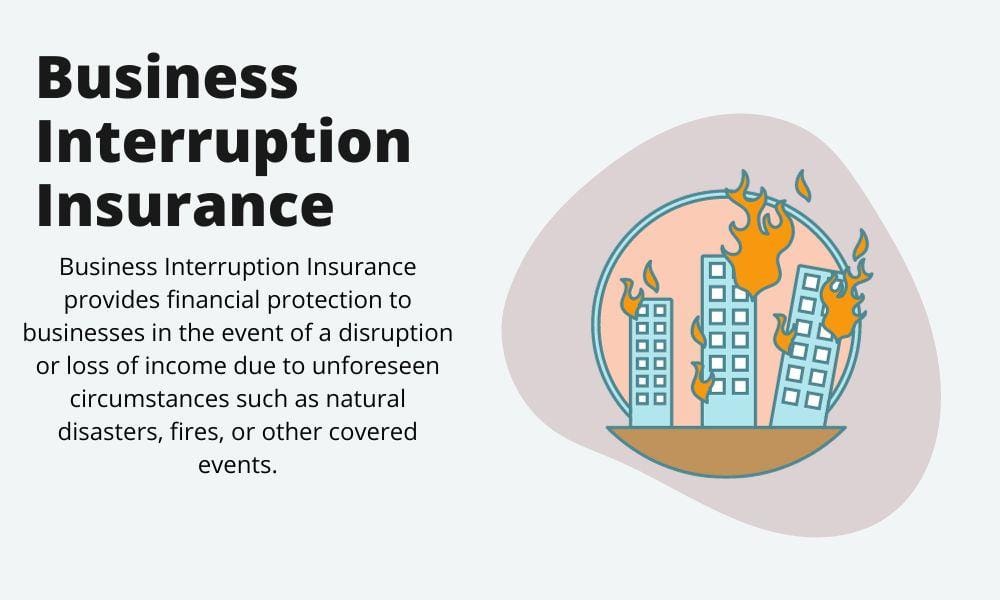
A Business Owner’s Policy (BOP) is a bundle that typically combines General Liability, Commercial Property, and Business Interruption insurance into one discounted package.
-
The Advantage: Requesting BOP quotes is usually much cheaper than buying these three policies a la carte.
-
Business Interruption Insurance: This is the hidden gem of a BOP. If a fire destroys your office, property insurance pays to rebuild, but business interruption pays for your lost revenue and ongoing payroll while you are closed.
The Step-by-Step Guide to Comparing Business Insurance Quotes
Do not just accept the first quote that lands in your inbox. Use this systematic approach to evaluate your options.
Step 1: Conduct a Comprehensive Risk Audit
Before requesting a small business insurance quote online, document your exact risks:
-
What is your projected annual revenue?
-
What is your exact annual payroll?
-
What is the replacement value of your physical assets (inventory, equipment, real estate)?
-
Do you operate internationally?
Step 2: Choose Your Sourcing Method
You have three primary ways to source quotes:
-
Direct Writers: Buying directly from carriers (e.g., GEICO Commercial, Progressive Commercial). Best for simple, ultra-small businesses.
-
Captive Agents: Agents who work for a single insurance company (e.g., State Farm). They know their specific products deeply but cannot shop the wider market.
-
Independent Brokers: Professionals who represent multiple carriers. They can pull quotes from Chubb, Travelers, The Hartford, and Hiscox simultaneously. For mid-to-large businesses, an independent broker is essential.
Step 3: Standardize Your Request
To accurately compare quotes, you must provide identical information to every broker or carrier. If you give Broker A an estimated payroll of $500k and Broker B an estimated payroll of $700k, the quotes will be impossible to compare side-by-side.
Step 4: Analyze the Anatomy of the Quote
When the quotes return, do not just look at the bottom-line premium. Compare these critical elements:
| Coverage Element | What to Look For | Why It Matters |
| Limits of Liability | Are the per-occurrence and aggregate limits identical across quotes? | A cheaper quote might just have lower maximum payouts. |
| Deductibles / SIR | What is the Self-Insured Retention (SIR) or deductible? | A high deductible lowers your premium but requires more cash on hand during a claim. |
| Exclusions | Read the specific exclusions carefully. | A policy might exclude specific high-risk activities common to your industry. |
| Carrier Rating | Check AM Best ratings. | A cheap quote from a carrier with a “B” rating is useless if they go bankrupt and cannot pay your claim. Aim for “A” or “A+” rated carriers. |
Top Mistakes to Avoid When Shopping for Commercial Insurance
-
Underestimating Property Value: Many business owners insure their property for its Actual Cash Value (ACV) instead of its Replacement Cost. ACV factors in depreciation. If a 10-year-old server farm burns down, ACV will only pay you what 10-year-old servers are worth today. Replacement Cost pays to buy brand new, modern servers.
-
Ignoring Endorsements and Riders: Standard policies have gaps. If your business relies heavily on specialized equipment, you may need an Equipment Breakdown endorsement.
-
Failing to Update Policies After Growth: If you double your revenue and staff mid-year but don’t notify your insurer, you might face heavy penalties or denied claims due to out-of-date risk profiles.
Factors That Drive Your Small Business Insurance Cost
Insurers use complex actuarial algorithms to price your risk. Here are the main variables that dictate the premium you see on your quotes:
-
Industry Classification: A roofing contractor will always pay more for general liability and workers’ compensation than a graphic design agency due to the inherent physical risks.
-
Location: Businesses in areas prone to natural disasters (hurricanes in Florida, wildfires in California) will see massive spikes in commercial property insurance. Furthermore, highly litigious states have higher liability premiums.
-
Claims History: A clean claims history (often verified through a “Loss Run Report” from your previous insurer) proves to underwriters that you are a safe bet.
-
Years in Business: Startups pay higher premiums. Insurers view established businesses with a multi-year track record as statistically safer.
-
Safety Protocols: Implementing rigorous employee training, maintaining secure premises with cameras, and utilizing modern cybersecurity infrastructure can trigger substantial premium discounts.
Industry-Specific Insurance Strategies
Different verticals require vastly different approaches to quote comparison.
Construction & Contracting
Contractors face immense physical and financial risks. When comparing quotes, a contractor must look for Builder’s Risk Insurance (covering materials in transit and on-site before installation) and specific Completed Operations coverage (protecting against lawsuits if a built structure fails years later). High-value keywords here include contractor liability insurance cost and surety bonds for construction.
Technology & SaaS
For software developers and IT consultants, physical risks are minimal, but financial and data risks are monumental. Tech companies must prioritize Technology Errors & Omissions (Tech E&O), which uniquely bridges the gap between professional mistakes (coding errors causing downtime) and cyber liability (hackers exploiting that code).
Healthcare & Medical Practices
Medical professionals require highly specialized Medical Malpractice Insurance. When comparing quotes, the distinction between “tail coverage” and “nose coverage” becomes critical when switching carriers, ensuring there are no gaps in coverage for past procedures that may result in future lawsuits.
Strategic Protection is a Competitive Advantage
Securing the lowest small business insurance cost is not about cutting corners; it is about strategic risk management. By taking the time to thoroughly compare business insurance quotes, understanding the nuances between General Liability, E&O, and Cyber policies, and partnering with top-rated carriers, you protect your balance sheet from unforeseen disasters.
Make reviewing your commercial insurance portfolio an annual, rigorous process. The right policy not only saves your company in a crisis—it provides the operational confidence needed to scale aggressively in a competitive market.
Decoding the Fine Print: Exclusions, Endorsements, and Riders
When you compare business insurance quotes, the most critical differences are rarely found on the summary page; they are buried in the policy’s fine print. A quote that appears to have an incredibly low small business liability insurance cost often achieves that price by stripping out essential coverages through exclusions.
To build a truly bulletproof risk management strategy, you must understand how to modify a standard policy using endorsements (also known as riders).
8.1 Common Policy Exclusions You Must Watch Out For
Insurance carriers use exclusions to limit their exposure to catastrophic or highly specific risks. Standard General Liability (GL) policies almost always exclude:
-
Intentional Acts: Damage or injury caused on purpose by the business owner.
-
Employee Injuries: This is strictly the domain of workers’ compensation.
-
Professional Mistakes: Excluded from GL, requiring a separate errors and omissions insurance for consultants or professionals.
-
Pollution and Environmental Damage: Standard policies exclude this. If you are a manufacturer, contractor, or auto shop, you will need a separate Environmental Liability policy.
8.2 Essential Endorsements to Request During Quoting
When comparing quotes, ask the broker how much it will cost to add the following high-value endorsements:
-
Additional Insured Endorsement: Often required by clients or landlords, this extends your liability coverage to a third party. If you are seeking contractor liability insurance quotes online, this is mandatory, as general contractors will require subcontractors to list them as additional insureds.
-
Equipment Breakdown Coverage: Standard commercial property insurance quotes cover external perils (like a fire or windstorm), but they do not cover internal mechanical failures. This endorsement covers the repair costs and lost income if a vital piece of machinery (like a restaurant’s walk-in freezer or a manufacturer’s CNC machine) breaks down.
-
Employment Practices Liability Insurance (EPLI): Protects against lawsuits brought by employees alleging discrimination, wrongful termination, harassment, or retaliation. In today’s legal climate, this is highly recommended for any business with a growing HR department.
The Strategic Value of Commercial Umbrella Insurance
Even the best-structured underlying policies have their limits. A standard General Liability or Commercial Auto policy usually maxes out at $1 million to $2 million per occurrence. In the event of a catastrophic lawsuit—such as a multi-vehicle accident caused by your delivery fleet or a severe product liability claim—those limits can be exhausted rapidly.
This is where requesting a commercial umbrella insurance quote becomes vital.
How Commercial Umbrella Insurance Works
An umbrella policy sits on top of your existing liability policies (General Liability, Employer’s Liability, and Commercial Auto). If a court awards a $3 million settlement against your company, and your standard GL policy has a $1 million limit, the umbrella policy kicks in to cover the remaining $2 million.
-
Cost Efficiency: Umbrella insurance is incredibly cost-effective. Because it only triggers after underlying limits are exhausted, the actuarial risk is lower for the carrier. You can often secure millions of dollars in extra coverage for a fraction of your primary premium.
-
Comparing Quotes: Insurers will only issue an umbrella policy if your underlying policies meet specific minimum limits. When comparing, ensure the quotes synchronize seamlessly with your existing portfolio to avoid coverage gaps.
State-by-State Variables and Regulatory Nuances
Insurance is regulated at the state level, not the federal level. Therefore, commercial auto insurance rates and workers’ compensation requirements vary drastically depending on where your company is headquartered and where it operates.
High-Risk Coastal States (Florida, California, Texas)
Businesses operating in states prone to catastrophic natural disasters face an entirely different quoting environment.
-
Commercial Property Challenges: In Florida and coastal Texas, hurricane risk makes standard property insurance exorbitant. In California, wildfire risk heavily impacts premiums. When comparing commercial property insurance quotes in these states, pay meticulous attention to separate windstorm, hurricane, and earthquake deductibles, which are often structured as a percentage of the property value rather than a flat dollar amount.
Highly Litigious States (New York, Illinois)
In states with complex labor laws, liability coverage requires intense scrutiny. For example, New York’s “Action Over” and “Scaffold Law” (Labor Law 240) hold general contractors and property owners strictly liable for gravity-related injuries. Consequently, securing comprehensive contractor liability insurance quotes in New York requires specialized brokers who understand how to navigate these severe regional exclusions.
Navigating Business Interruption Insurance Claims
While securing the right policy is the first step, understanding how it reacts during a crisis is paramount. Business interruption insurance (often part of a BOP) is designed to replace lost income and pay fixed expenses (like rent and payroll) if a covered peril forces you to close your doors.
However, a business interruption insurance claim is notoriously complex to settle. Carriers will heavily scrutinize your financial records to determine the exact amount of “lost income.”
How to Prepare During the Quote Phase:
-
Actual Loss Sustained vs. Stated Amount: Ensure you know how the policy calculates your payout. “Actual Loss Sustained” covers the exact proven loss, while a “Stated Amount” caps the payout at a predetermined limit.
-
The Waiting Period: Most policies feature a 48-to-72-hour waiting period before coverage kicks in. Consider the financial impact of this deductible-in-time when evaluating your options.
-
Extended Business Income: Look for policies that offer “Extended Business Income” coverage, which continues to pay out for a specified period (e.g., 30 to 90 days) after your physical property is repaired, giving your business time to regain its former customer base and revenue levels.
Frequently Asked Questions (FAQ) About Business Insurance Quotes
To round out your knowledge and address the most pressing concerns business owners face, here are answers to the most highly searched commercial insurance queries.
How much does cyber security insurance for small business cost?
The cost of cyber security insurance for small business varies based on your industry, revenue, and data storage practices. A small retail shop processing credit cards might pay $500 to $1,000 annually. However, a healthcare startup storing sensitive patient records (PHI) could see premiums ranging from $3,000 to over $10,000, depending on their cybersecurity infrastructure (like MFA and encryption).
What is the average directors and officers insurance cost?
Directors and officers insurance cost is heavily influenced by the company’s financial health, ownership structure, and legal history. For a private, mid-sized company with solid financials, a $1 million D&O policy might cost between $3,000 and $5,000 annually. However, startups seeking Series A funding or companies preparing for an IPO will see significantly higher premiums due to the increased scrutiny from investors and regulators.
Do I need to buy group health insurance for my small business?
Under the Affordable Care Act (ACA), businesses with 50 or more full-time equivalent (FTE) employees are legally required to offer affordable health insurance or face penalties. Businesses with fewer than 50 employees are not mandated to provide coverage, but offering group health insurance for small business is one of the most powerful tools for recruiting and retaining top talent. When comparing health insurance quotes, factor in the tax advantages, as premium contributions are typically tax-deductible.
Why did my commercial auto insurance rates increase this year?
The commercial auto insurance market has been in a “hard market” phase for several years, leading to widespread rate increases. Factors driving up commercial auto insurance rates include an increase in distracted driving, higher settlement payouts in bodily injury lawsuits (nuclear verdicts), and the soaring cost of vehicle repairs due to complex onboard technology and supply chain disruptions.